
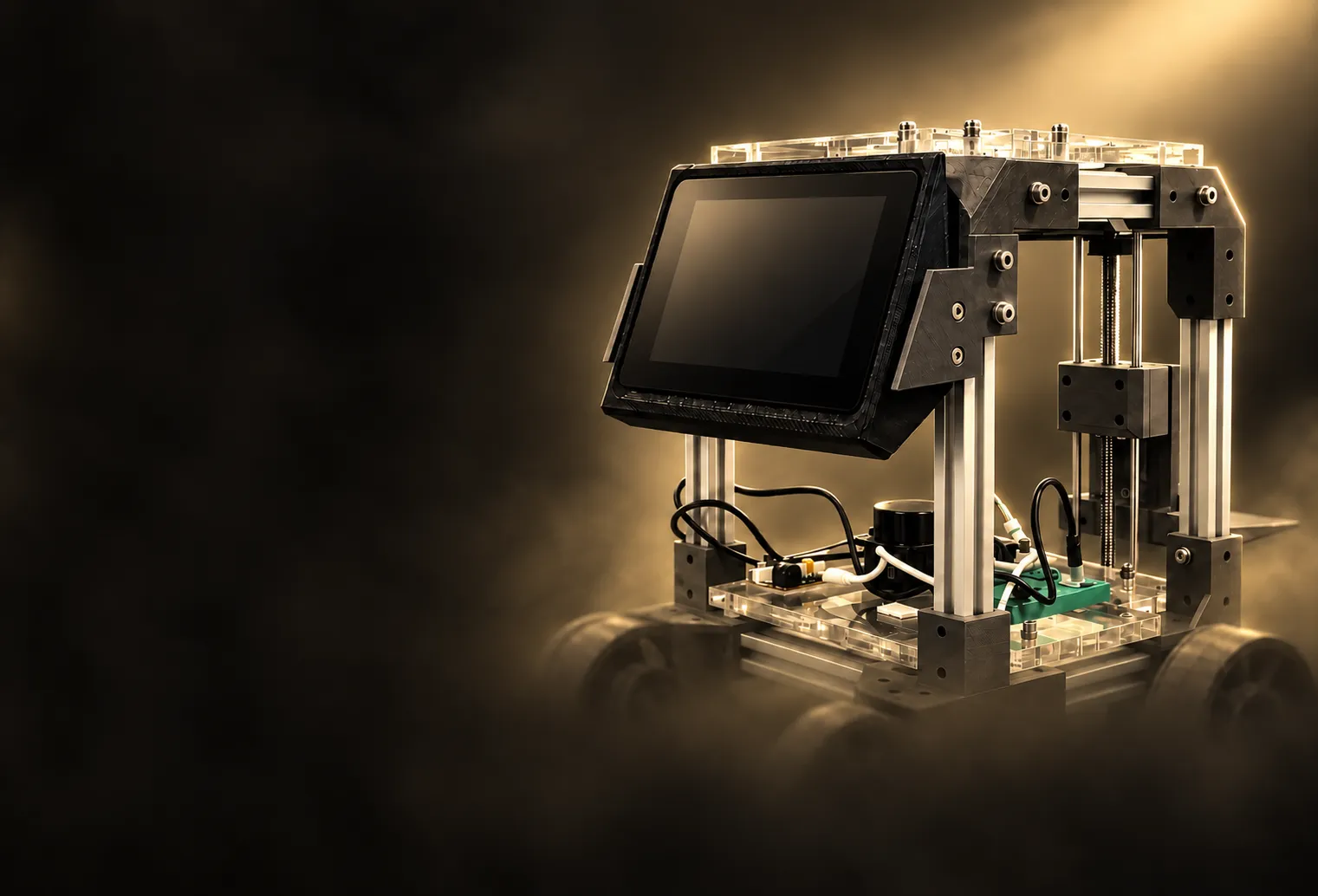
Master ROS 2. Build robots that move the world.
Learn robot programming, simulation and navigation through hands-on projects and expert mentorship. Beginner to job-ready in 12 weeks.
₹40,000 ₹30,000 incl. GST, one-time. Lifetime LMS access.
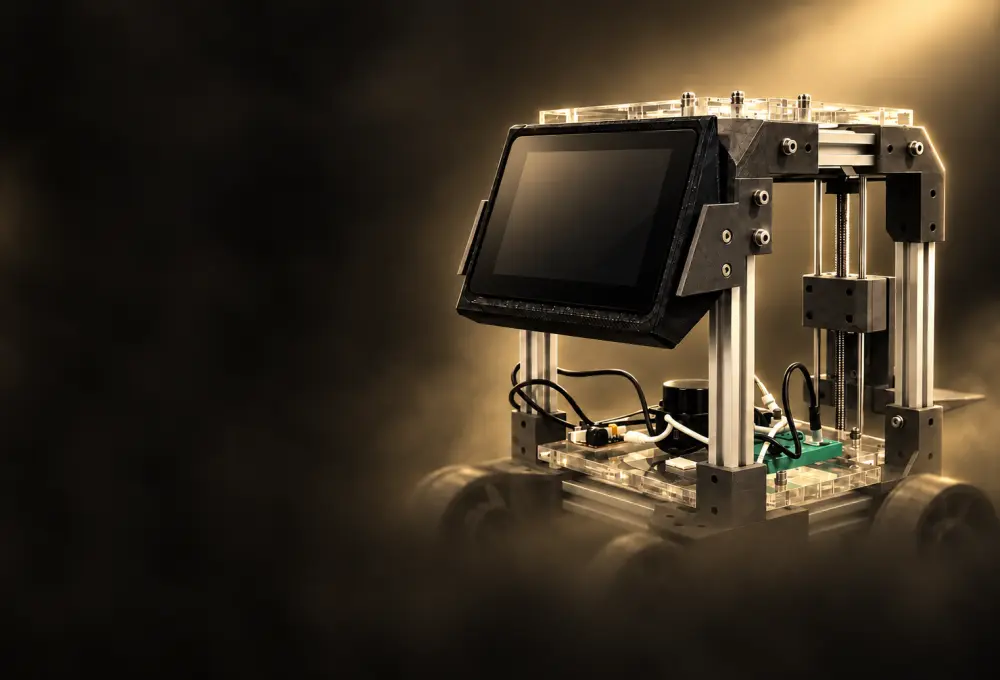
- 12weeks
- Self-paced modules with live evening doubt sessions
- 80+hours
- Hybrid curriculum, Ubuntu to SLAM
- 9modules
- From Linux setup to navigation and vision
- 2projects
- A warehouse robot and a campus delivery robot
Trusted by multiple companies India-wide
















Engineers who choose ROS 2 become the top 1%.
Robotics engineers with ROS 2 skills earn 20 to 40% more on average, with roles paying up to ₹20 LPA in India and $120k globally. It is a high-demand, high-value skill in automation and AI-driven industries.
Read the analysis on MediumIndustry-backed and job-ready
Used by top companies like Amazon Robotics and Open Robotics. Mastering ROS 2 makes you industry-ready.
Cross-platform and scalable
Develop once, deploy anywhere: from laptops to Raspberry Pi and Jetson-powered robots.
Real-time, reliable systems
ROS 2 supports real-time performance and secure communication, critical for real-world robotic applications.
In-demand skillset
With the robotics job market booming, ROS 2 expertise puts you ahead of the curve.
Who is this program for?
Whether you are starting out or scaling up in robotics, this program is built for learners, builders and professionals ready to master ROS 2 and create real-world impact.
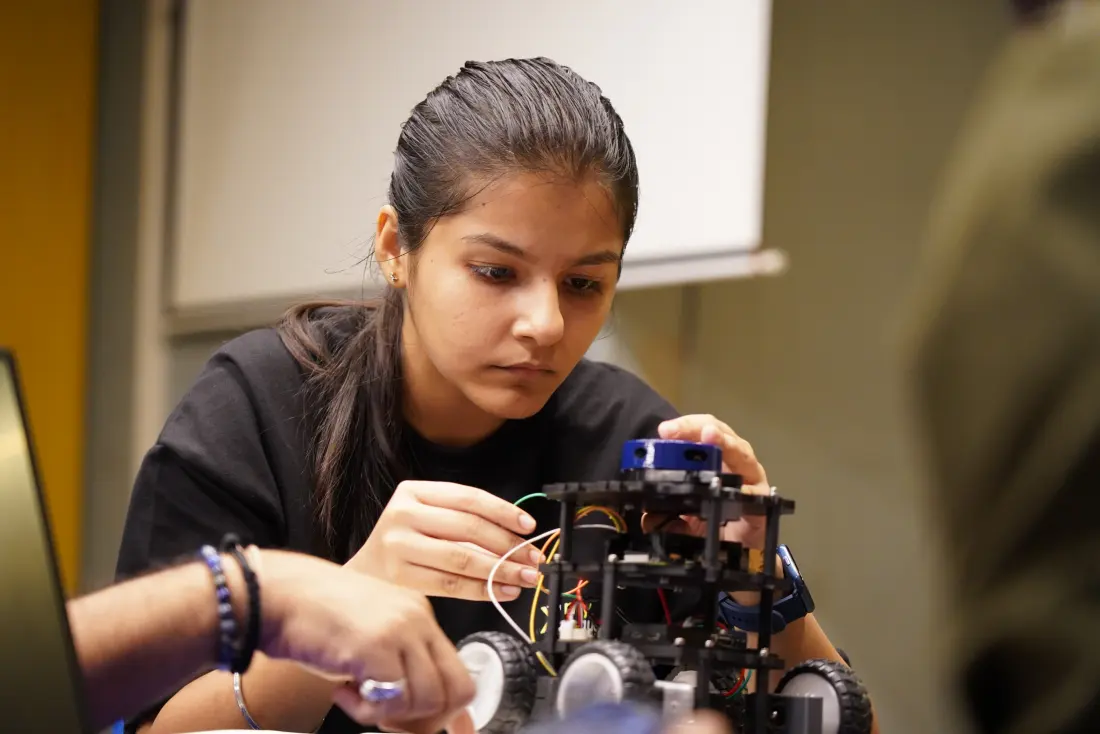
Students & beginners
Passionate learners from STEM backgrounds eager to start their journey in robotics and automation.
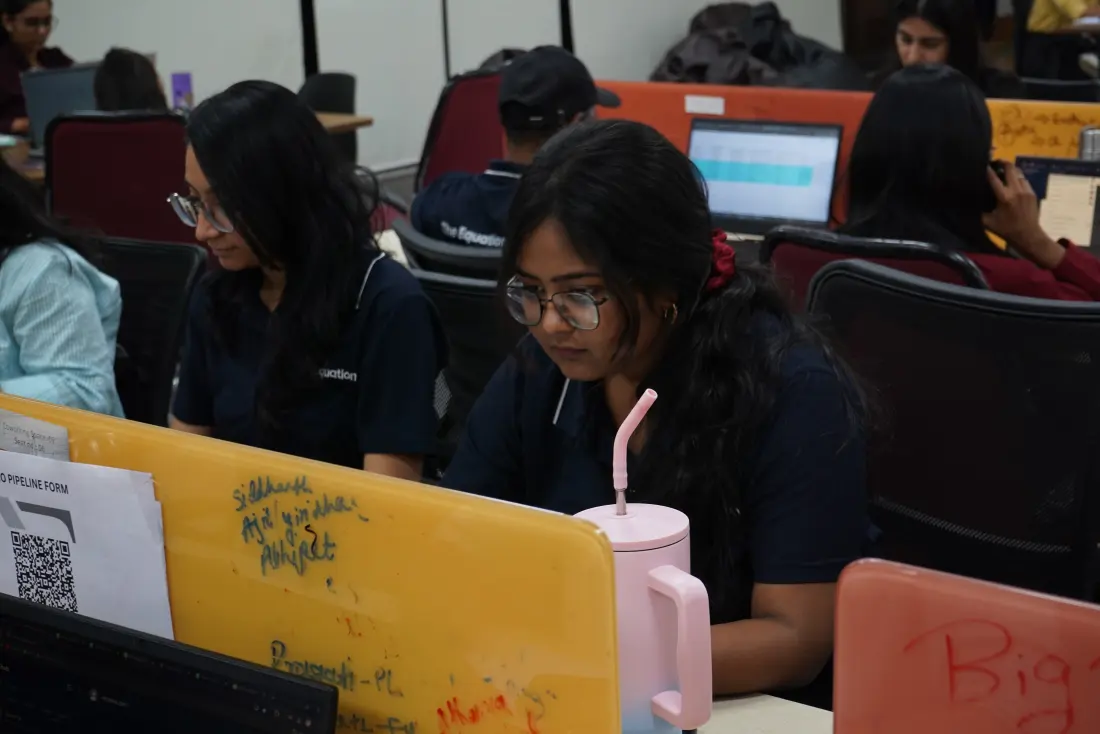
Engineers & developers
Professionals looking to transition into robotics, autonomous systems, or real-time control development.
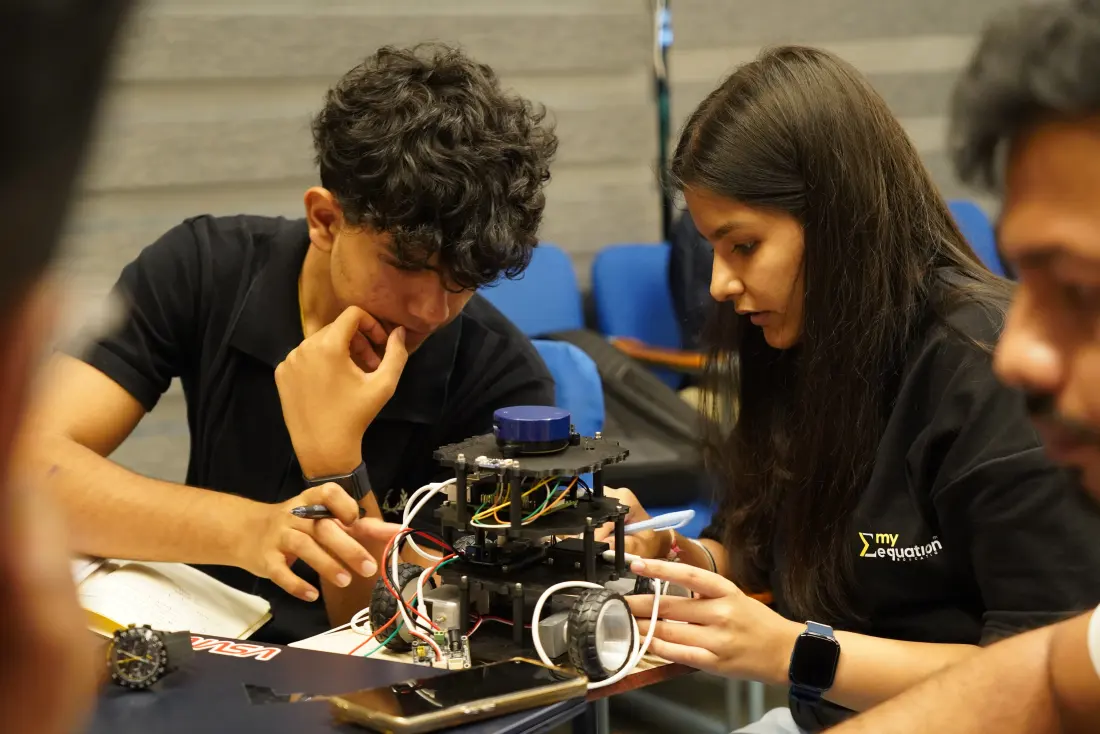
Researchers & academics
Postgraduates and scholars applying ROS 2 in advanced projects, simulations, or academic research.
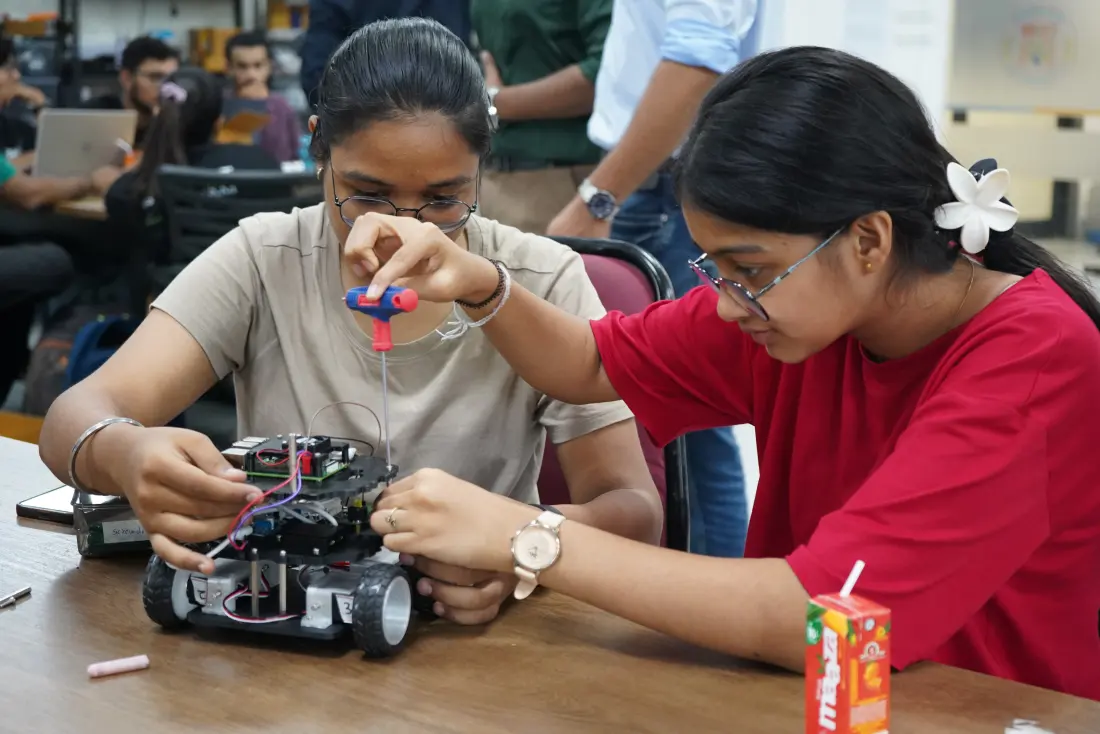
Makers & hobbyists
Innovators building real-world robotic solutions, from personal projects to prototype automation.
Master the skills behind modern robotics.
9 modules and 42h 30m of hybrid content, from installing Ubuntu to SLAM, navigation and vision. Self-paced, with live evening doubt sessions with mentors.
- Install Ubuntu 22.04 and ROS 2 Humble for robot software development
- Configure ROS 2 environment variables and dependencies
- Use VS Code, CLI, and colcon to manage and build ROS projects
- Understand ROS 2 filesystem layout and package structure
- Explore ROS 2 terminal tools like ros2 pkg, ros2 node, ros2 topic
- Practice verifying installations and resolving dependency issues
- Install Ubuntu OS tailored for ROS 2 compatibility
- Learn basic Linux commands for navigation and file management
- Use terminal operations like cd, ls, grep, chmod, and sudo
- Understand directory structures, permissions, and system updates
- Practice package management using apt and snap
- Learn to edit files using nano, vim, and configure network settings
- Understand what ROS is and its role in robot application development
- Compare ROS 1 vs ROS 2 in terms of architecture, performance, and reliability
- Learn DDS-based communication and how ROS 2 uses publishers/subscribers
- Study ROS 2 design principles, modularity, and layered architecture
- Explore real-world ROS 2 use cases in industries and research
- Understand core libraries like rcl, rclcpp, and rclpy for node creation
- Create and organize ROS 2 workspaces and packages
- Write publisher, subscriber, and service nodes in Python or C++
- Use colcon to build, compile, and run ROS 2 projects
- Automate node execution with ROS 2 launch files
- Practice using TurtleSim to control robots with topics and services
- Explore ROS 2 command-line tools (ros2 run, ros2 topic echo, etc.)
- Set up 3D robot simulations using Gazebo Classic
- Visualize robot data and sensor streams using RViz
- Install and simulate TortoiseBot in Gazebo Classic for hands-on practice
- Define robot structure using URDF (Unified Robot Description Format)
- Enhance simulation with Gazebo plugins for mobility and perception
- Understand basic odometry to estimate robot movement over time
- Work with the description package (URDF, meshes, robot models)
- Launch complete simulation scenes using the Gazebo package
- Understand firmware-level control for wheels, sensors, and encoders
- Explore SLAM capabilities for mapping and localization
- Use the navigation package for path planning and autonomous movement
- Combine multiple packages using the bring-up launch system
- Create a custom robot model using URDF structure and syntax
- Add links, joints, and actuators to simulate robotic arms or manipulators
- Integrate the custom URDF with Gazebo simulation environment
- Modify inertial, visual, and collision properties of robot parts
- Complete the setup with launch files and plugin support
- Test manipulator behavior and verify joint movements in simulation
- Simulate differential drive robots using the drive controller plugin
- Add LIDAR plugins to detect distances, obstacles, and walls
- Integrate camera plugins for visual perception and object tracking
- Configure plugin parameters for real-world accuracy
- Combine multiple sensors in a single URDF for complete robot design
- Visualize sensor output in RViz and validate with simulation
- Design and simulate your own custom Gazebo world
- Understand SLAM (Simultaneous Localization and Mapping) fundamentals
- Integrate SLAM algorithms into URDF-based simulations
- Use ROS 2 Navigation Stack for path planning and obstacle avoidance
- Implement camera vision tasks using OpenCV with ROS 2 nodes
- Develop image-based navigation, detection, or visual feedback systems
Two robots you will actually build.
Build practical ROS 2 skills through real robotics challenges.
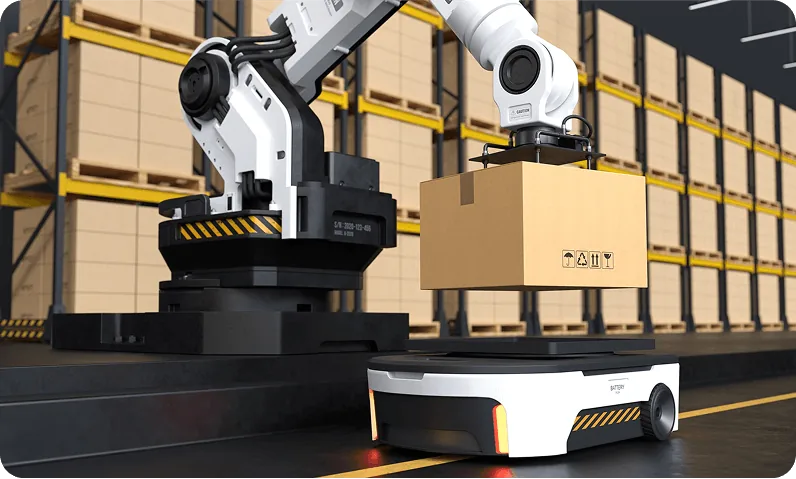
Warehouse Inventory Robot
Build a smart warehouse robot capable of navigating cluttered spaces, detecting inventory in real time, and autonomously moving across mapped zones, just like in Amazon-grade facilities.
- 1Path planning and obstacle avoidanceNavigate through aisles while avoiding obstacles.
- 2Real-time object detectionUse OpenCV to identify items during movement.
- 3Indoor map and navigationBuild and follow maps for autonomous indoor movement.
- 60+
- Workshops and industrial trainings
- 53,000+
- Mentees enrolled
- 1,950+
- Colleges reached across India
- 40+
- Internship companies
Learn from engineers who build robots for a living.
Industry professionals who have shipped real ROS 2 systems, guiding you in live doubt sessions and project reviews every step of the way.
Shubham Nandi
Co-Founder, RigBetel Labs
LinkedIn
Sukumar
Senior Research Engineer, LG Electronics
LinkedIn
Keivalya
Researcher, PARCS / NeU
LinkedIn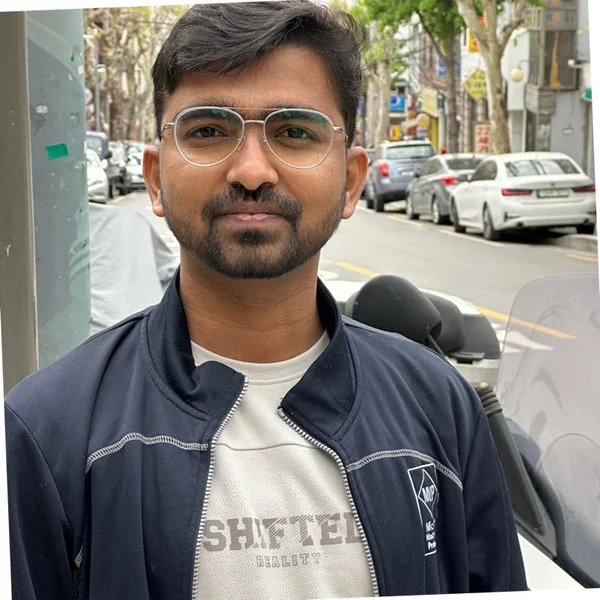
Navaneetha
Robotics Engineer, Thedush Robotics
LinkedIn
Abdul
Robotics Developer, Absafe Solutions
LinkedIn
Deva Prakash
Robotics Software Engineer, GOAT Robotics
LinkedIn
What ROS 2 learners post about it.
Every quote below links to the learner's own public LinkedIn post. Read it there, in full.


What you walk away with, module by module.
Slide along the nine modules to see what you can do at each point. Every skill sits on the module that teaches it.
- M01Linux deployment
- M02Shell scripting
- M03ROS 2 architecture
- M03Pub/Sub communication
- M04System design
- M05Gazebo simulation
- M05RViz visualization
- M05URDF modeling
- M06Real-time control
- M06Robot navigation
- M08LiDAR & camera setup
- M08Sensor integration
- M09SLAM basics
- M09OpenCV perception
And the habits that make them count
- Adaptability
- Problem solving
- Effective communication
- Collaborative teamwork
- Leadership
- Attention to detail
- Time management
- Critical thinking
One payment. Lifetime access.
No subscriptions, no renewals. Pay once and the LMS, recordings and community stay yours.
- Duration
- 12 weeks
- Format
- Hybrid
- Access
- Lifetime
ROS 2 Nanodegree, full programme. One-time payment.
- 9 modules, 42h 30m of hybrid content
- Live evening doubt sessions with mentors
- 2 major projects reviewed with feedback
- Certificate of Completion
- Letter of Recommendation on meeting project benchmarks
- Lifetime LMS access, alumni group, job and internship alerts
Secure payment via Razorpay. Opens in a new tab.
Questions, answered.
Anything else, the career counselling team is a message away.
The core learning content is self-paced, allowing students to study at their own convenience, while engagements like Q&A sessions, doubt-solving, and project discussions are conducted live with mentors to ensure interactive and guided learning.
Yes, a Certificate of Completion is awarded to all participants who complete the core modules. Learners who finish all required projects and meet performance benchmarks are eligible for Letters of Recommendation.
The program follows a self-paced format, with all learning materials available 24/7 for flexible study. To support learners, live doubt-clearing sessions and engagement activities are scheduled in the evenings (IST), making it easy to balance with academic or work commitments.
Occasionally, we run early bird offers, group discounts, or limited-seat scholarships. Please contact our career counselling team to check current eligibility.
Yes, you'll have continued access to LMS recordings, be part of the alumni group, receive job/internship alerts, and stay eligible for future hackathons and showcases.
You will have access to a dedicated support team available to answer any questions and provide assistance throughout the training program. Additionally, there will be regular check-ins with your mentors.
You can track your progress through our dedicated learning management system, which provides regular updates on your performance, grades, and completion status for each module.
You'll receive mentor support through live doubt-clearing sessions, LMS discussion forums, and session chats. Project submissions are reviewed with feedback, and a peer community is available for collaborative learning.
No prior experience with ROS is required. A basic understanding of Linux, Python/C++, and robotics fundamentals is recommended, but optional preparatory material will be shared with enrolled learners.
Start building robots that move the world.
Twelve weeks, nine modules, two robots, real mentors. One conversation to get started.