Because six minutes sounded too optimistic.

AI is everywhere now. Your phone uses it. Your boss uses it. Your roommate uses ChatGPT to write emails he could have written himself in the same amount of time it took him to think of a prompt.
And yet, somehow, we went from asking AI to write emails to casually discussing neural networks at lunch. So instead of pretending you need a PhD, 14 research papers, and three cups of coffee to understand them, let’s break down six AI concepts in approximately seven minutes.
No unnecessary jargon. No equations that look like they were invented specifically to ruin engineering students’ weekends.
1. Machine Learning: Evolution, but for Mistakes
People often say machine learning “learns from its mistakes.” Technically true. A machine-learning model starts with a job and a lot of data. It makes a prediction, gets told how wrong it was, adjusts itself, and tries again. Then it does this again. Imagine giving someone a test, telling them exactly how badly they messed up, changing a few answers, and making them retake the same test millions of times.
There is just:
Prediction → Error → Adjustment → Repeat.
If the model predicts that a photo contains a cat and it is actually a dog, the error gets measured. The model adjusts its internal parameters to reduce that error. Do this across enormous amounts of data, and those tiny adjustments gradually add up.
It's less “the machine learned a lesson” and more:
“You were wrong. Try again.”
Eventually, the model becomes very good at the particular task it has been trained for. Show it enough examples of spam and it gets better at spotting spam. Give it enough transaction data and it can learn patterns associated with fraud.
That's what makes machine learning so powerful. The same basic idea can help recommend your next pair of shoes, detect suspicious banking activity, predict equipment failures, or decide whether your photo contains a cat.
2. Neural Networks: Human Brain but with Electricity
Someone once looked at the human brain, noticed it was made of messy little cells that talk to each other by firing sparks, and said, “What if we did that, but with math and zero ethics about overtime?” Thus the neural network was born.
A neural network is layers of artificial neurons. Each one takes numbers in, multiplies them by some weights it made up, adds a bias because why not, and then decides whether to get excited or stay quiet. Stack enough of these layers and the whole thing starts recognizing faces, translating languages, or generating that one image of a dog wearing a business suit.
The uncommon part is that these networks do not “understand” anything in the way you understand that touching a hot stove is a bad life choice. They are pattern amplifiers. Show them enough examples of “hot stove + pain” and they will eventually flinch at the concept of heat. But if you show them a picture of a stove made of ice cream, they might still try to lick it. The network has no common sense. It has only the ghosts of the data it was fed.
Calling it a “brain” is generous. It is more like a very large, very expensive spreadsheet that learned how to hallucinate.
3. Deep Learning: You Have to Do It, Better Do It Deep

Deep learning is what happens when someone looks at a regular neural network and says, Cute. Now add more layers and it keeps going.
Shallow networks can do simple things. Deep networks can do the weird, impressive things that make people write LinkedIn posts about the future of work. The extra layers let the system build hierarchical representations. Early layers notice edges and textures. Middle layers notice shapes and parts. Later layers notice “this is a cat that somehow looks disappointed in my life choices.”
The joke is that “deep” sounds profound, but the actual insight is almost embarrassingly practical: if you give the network more room to transform the data step by step, it gets better at the hard problems. It is less philosophy and more “what if we just made the thing taller?” The trade-off is that you now need absurd amounts of data and electricity, and the model becomes a black box that even its creators side-eye when it starts recommending pineapple on pizza with unsettling confidence.
Deep learning is the reason your phone can unlock with your face and also the reason you once got an ad for divorce lawyers after googling “is it normal to hate your roommate.”
4. Generative AI: Just Say What You Want
Generative AI is the part of the family that does not want to classify or predict. It wants to create. You give it a prompt, and it produces text, images, music, or code that did not exist five seconds earlier.
The uncommon angle is that generative models are not artists. They are extremely sophisticated autocomplete engines that have read the entire internet and decided to cosplay as creative. When you ask for “a cyberpunk raccoon running a coffee shop,” the model is not imagining a raccoon. It is calculating the most statistically plausible continuation of the words you typed, based on every raccoon, every coffee shop, and every neon-drenched alley it has ever statistically absorbed.
It feels magical because the output is often coherent and occasionally delightful. It feels slightly unhinged because the same system will cheerfully invent fake citations, invent historical events, or decide that the best way to draw hands is to give people seven fingers and call it a day. Generative AI is the friend who will help you brainstorm a novel and then, without warning, insert a subplot about sentient toasters.
You do not program it with rules. You describe the vibe and hope the vibe has good taste.
5. Large Language Models: Bro’s Whole Future Runs on Prediction
Large language models are generative AI’s word-obsessed cousins. They are trained on oceans of text so they can predict the next token (roughly, the next word or piece of a word) with unsettling accuracy.
The entire parlor trick is next-token prediction at scale. That is it. No secret chamber of understanding. No little homunculus inside the model who “gets” Shakespeare. Just a system that has seen so many sequences of words that it can keep the sequence going in ways that look intelligent, helpful, or occasionally unhinged.
This is why LLMs can write essays, debug code, role-play as a pirate, and also confidently tell you that the capital of France is Berlin if the statistical winds are wrong that day. Prediction is powerful. Prediction is also not the same thing as knowledge. The model does not “ know” things. It has compressed patterns so effectively that the compressed patterns can be queried like knowledge.
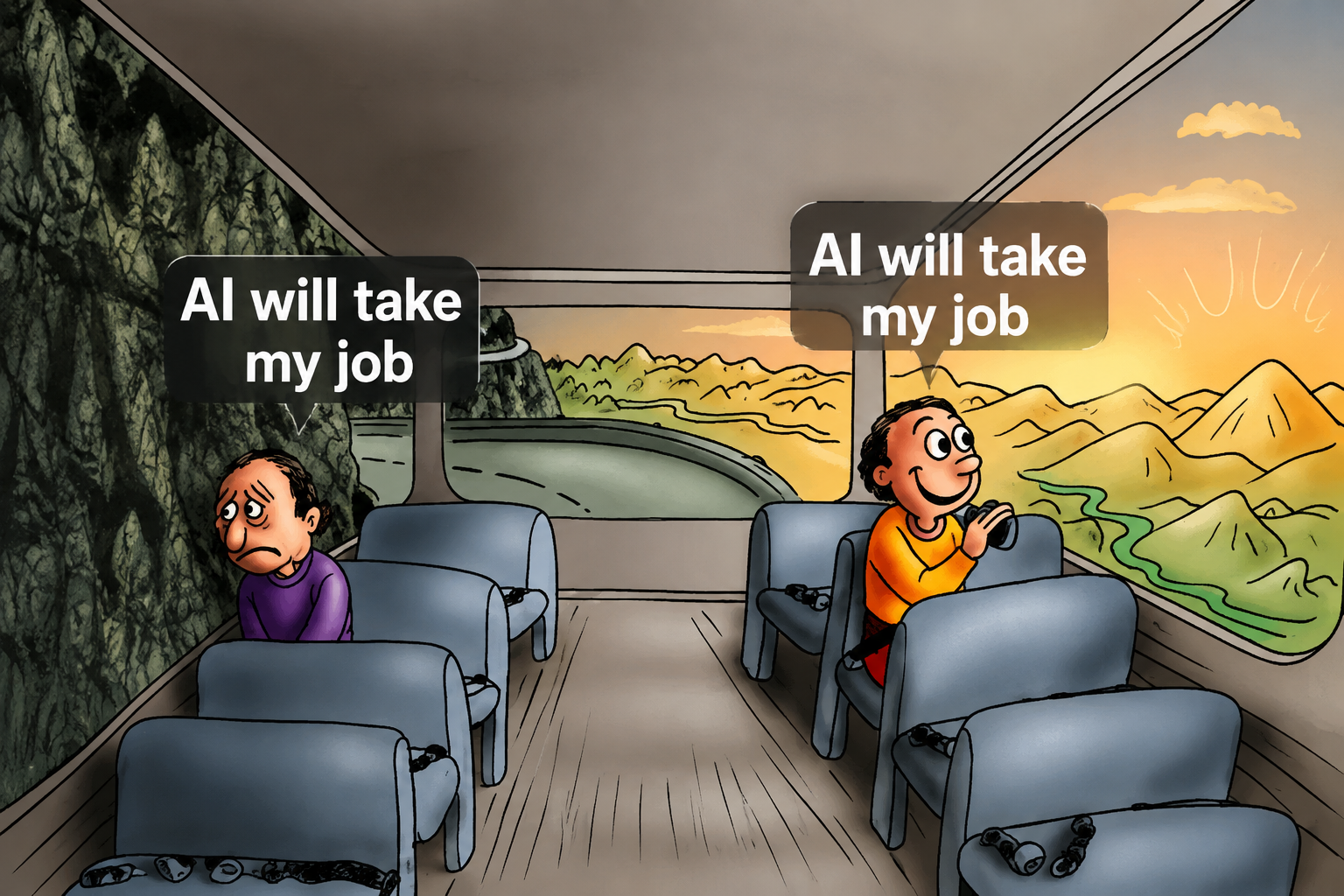
The future-of-work panic is largely about this: a system that is very good at continuing text can do a shocking amount of the text-shaped work that used to require a human. Whether that is liberating or terrifying depends on whether your job involves a lot of next-token prediction that you were billing by the hour.
6. AI Agents: Because Apparently Automating Task Wasn’t Enough
An AI agent is what you get when you take a large language model and give it permission to do things instead of just talk about them. It can call tools, browse, write code, click buttons, and chain actions together until a goal is reached or everything catches fire.
The shift is from “answer my question” to “achieve this outcome.” You say “book me a flight under $400 that lands before noon,” and the agent starts checking sites, comparing options, maybe filling forms, and eventually either succeeding or sending you a very polite message about how the universe conspired against cheap morning flights.
What feels new here is the loop. The agent plans, acts, observes the result, and replans. It is not a one-shot response. It is a little digital intern that keeps trying until the task is done or it has exhausted its tool budget and its dignity. The comedy and the risk live in the same place: the agent will sometimes pursue the goal with the single-minded focus of a raccoon that has spotted an open dumpster. Give it the wrong tools or the wrong constraints and it will cheerfully book the wrong flight, delete the wrong file, or decide that the best way to “optimize your calendar” is to cancel every meeting you actually needed.
That is the seven-minute tour. None of these systems are magic. They are scale, statistics, and an almost heroic amount of electricity. The uncommon truth is that the “intelligence” is mostly the side effect of being extremely good at finding patterns in data that happens to look like the patterns humans care about. Enjoy the tools. Keep your hands away from the dumpster. Next time someone asks you what AI actually is, you've now got seven minutes' worth of answers