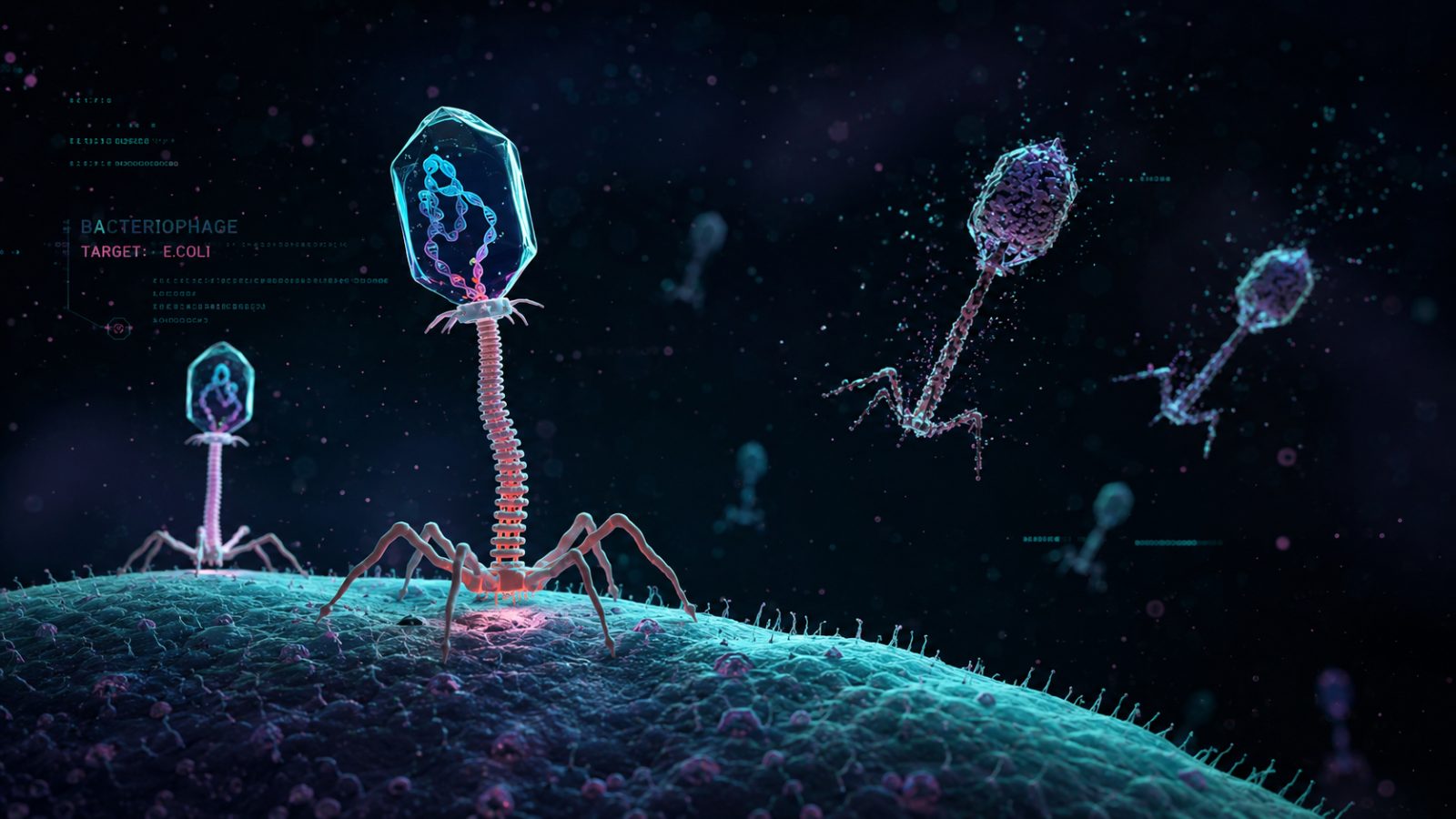
For most of human history, biology was something we observed. We studied cells, mapped genomes, and eventually learned to read DNA like a programming language. Now, in 2026, we've crossed into stranger territory: AI isn't just reading the code of life anymore. It's writing it.
If that sentence made you sit up a little, good. It should. Because somewhere between "AI can write your emails" and "AI can write your DNA," we skipped past a milestone that deserves a lot more attention than it's getting.
AI Just Entered a New Programming Language
Every piece of software you've ever used is built on a language Python, JavaScript, C++, whatever. AI models like ChatGPT and Claude got very good, very fast, at understanding and generating these languages because code has a structure. It has rules and patterns that repeat.
Our DNA has all of that too. It's a four-letter language (A,T,C,G) that's been running continuously, without a single reboot, for billions of years. So a team led by Brian Hie at Stanford did the obvious thing: they built AI models named Evo1 and Evo2 that work exactly like large language models, except instead of predicting the next word in a sentence, they predict the next letter in a genome. They trained these models on genetic sequences pulled from viruses, bacteria, plants, and people, essentially feeding them the entire language of life and letting them figure out the grammar on their own.
This wasn't a "let's see what happens" experiment either. The first time generative AI has been used to design a complete, functional genome capable of replicating and operating inside a living cell.
And here's the part that should make you pause: Stack Overflow can help you fix bad code. Evolution doesn't come with instructions. It has been building life for billions of years, without anyone explaining what each piece does. Evo1 and Evo2 are basically helping us read that code and understand how it works.
The Coding Language for Biology Nerds

In software, a typo might crash your app. Annoying, but recoverable. You hit Ctrl+Z, you patch it, you redeploy.
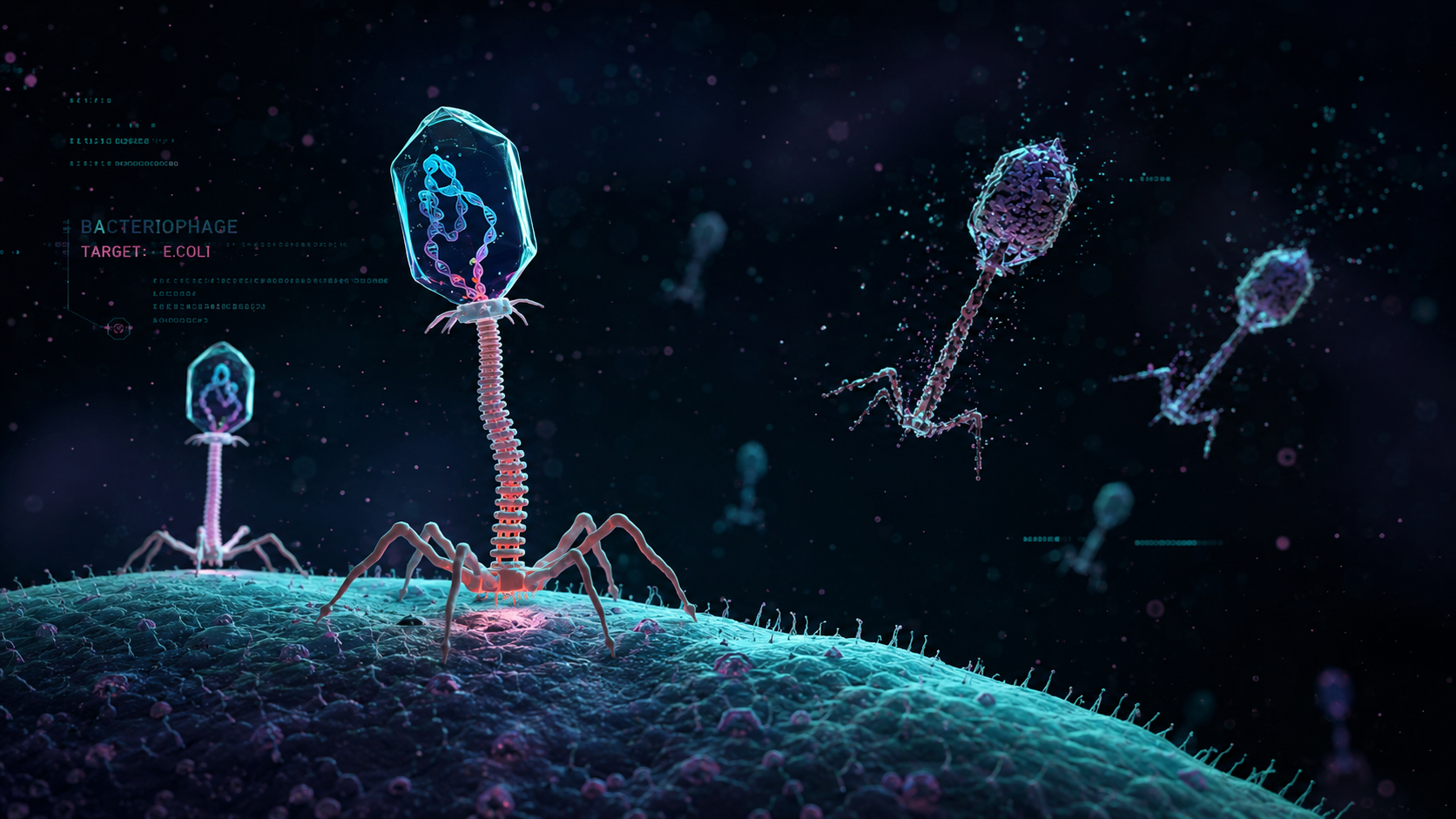
In biology, there's no undo button. Which makes what actually happened in this experiment even more remarkable. The Stanford team used Evo2 to generate 302 candidate genomes for bacteriophages viruses that infect bacteria rather than people. They then synthesized those designs in the lab to see which ones actually worked as living, replicating code. Surprisingly sixteen did. Sixteen brand-new organisms, invented by an AI, that could successfully infect and kill E. coli bacteria.
By the team's own account, they knew it was working when they saw clear spots appearing on petri dishes signs the new phages were literally eating through the bacterial layer. When the results were shared with the wider lab, the room reportedly broke into applause. Which, fair enough. That's a very reasonable reaction to watching a piece of AI-generated code come alive on a petri dish.
If you want the simplest possible mental model: DNA is the source code, the organism is the compiled application, and the lab is the staging environment where AI-generated builds get tested before anyone talks about shipping to production.
Engineering the Next Generation of Medicine
This is where the abstract stuff turns into something you'll actually feel. The most practical use of this research could be phage therapy using viruses that specifically attack bacteria instead of relying only on antibiotics.
Think of it like an engineering design problem. If you need a very specific component, you could search through thousands of existing parts and hope you find one that fits. Or, if you have the tools to design components yourself, you can create one that matches your exact requirements.
That's the idea with AI-designed phages. Researchers could potentially use AI to design a phage that targets a specific type of harmful bacteria, instead of searching through nature and hoping the right one already exists.
Beyond phages, researchers see this same approach extending to enzymes for treating genetic disorders and antibodies for immunotherapy.
This isn't just faster medicine, it's a different kind of medicine. Instead of finding drugs that already exist somewhere in nature and hoping they work, researchers can increasingly design molecules and organisms from scratch for a specific biological target. That's a fundamentally different starting point than medicine has ever worked from.
The Source Code of Life Is Becoming Programmable
Zoom out far enough, and the real story isn't "AI helped design 16 viruses." It's bigger than that. Biology is quietly shifting from being a discovery-based science to an engineering-based one.
For most of history, biologists found things like a useful enzyme in a hot spring, a protein in a rare organism, a compound in a plant that happened to fight infection. Discovery was largely about searching what nature already built and getting lucky. What Evo1 and Evo2 represent is something else entirely: not searching nature's back catalog, but generating new entries for it.
We've officially gone from debugging code to debugging life itself and somehow, unbelievably, the semicolons still matter. A misplaced base pair is still a misplaced base pair, whether a human typed it or a model generated it.
We're Still in the Early Commits
If this all feels a little dizzying, that's appropriate. We are, genuinely, at the beginning of something enormous. Sixteen synthetic viral genomes on a petri dish in a Stanford lab is not, on its own, a revolution. But it is proof of concept for something much larger: that AI can now write functional biology, not just read it.
For engineers, this is almost like discovering that the world's most complicated machine has a programmable interface. And like every powerful engineering tool, it comes with responsibility. The same technology that could help fight disease could also create new risks if used carelessly. The better these systems become, the more important safety, testing, and human oversight will become.