Can You Vibe Code a Robot?
There's a specific kind of confidence you only get from watching one autonomous robot video and deciding you are basically a robotics engineer now. I had that confidence. I had a chat window open, a pile of servos I didn't fully understand, and the kind of denial usually reserved for people who microwave metal "just this once." It was a slow, expensive education in the difference between code that runs in a browser and code that has to physically not fall off a table.
This is that story. Buckle up, or don't. I want to be upfront that I did not go into this thinking I was going to become a warning label. I went in thinking I was ahead of the curve. AI writes code now, robots are just code with limbs, therefore I had basically already won before I'd plugged anything in. That is the exact energy that gets people banned from hardware stores.
What Even Is Vibe Coding?
Vibe coding, for the blissfully unaware, is when you describe what you want to an AI in the tone of a customer who's never worked a service job, and it spits out working code before you've finished your sentence. No documentation read. No syntax memorized. You just... vibe. You say "make the button do the thing when I click it," and somehow, it does the thing.
For websites, apps, and small tools that run safely inside a browser, this is genuinely magic. If something goes wrong, the consequences are usually pretty minor. Your to-do list app might hit a weird edge case, but at worst, you refresh the page and pretend the last twenty minutes never happened.
The entire pitch of vibe coding rests on one comforting assumption: mistakes are cheap and reversible. That assumption works great right up until you introduce something that exists in three-dimensional space and has strong opinions about gravity.
Don't Vibe-Code a Robot
Don't vibe-code a robot before reading this: a robot does not care about your vibe. A robot cares about voltage, torque, and the fact that you told a servo to rotate 400 degrees when it physically maxes out at 180 at which point it does not "throw an error." It makes a sound like a tiny mechanical scream and then never works again.
Software bugs are embarrassing. Hardware bugs are financial and occasionally olfactory. You cannot undo a motor that's already cooked itself into a hockey puck. There is no version control for a chassis that caught fire because two wires that should never have touched decided to become best friends.
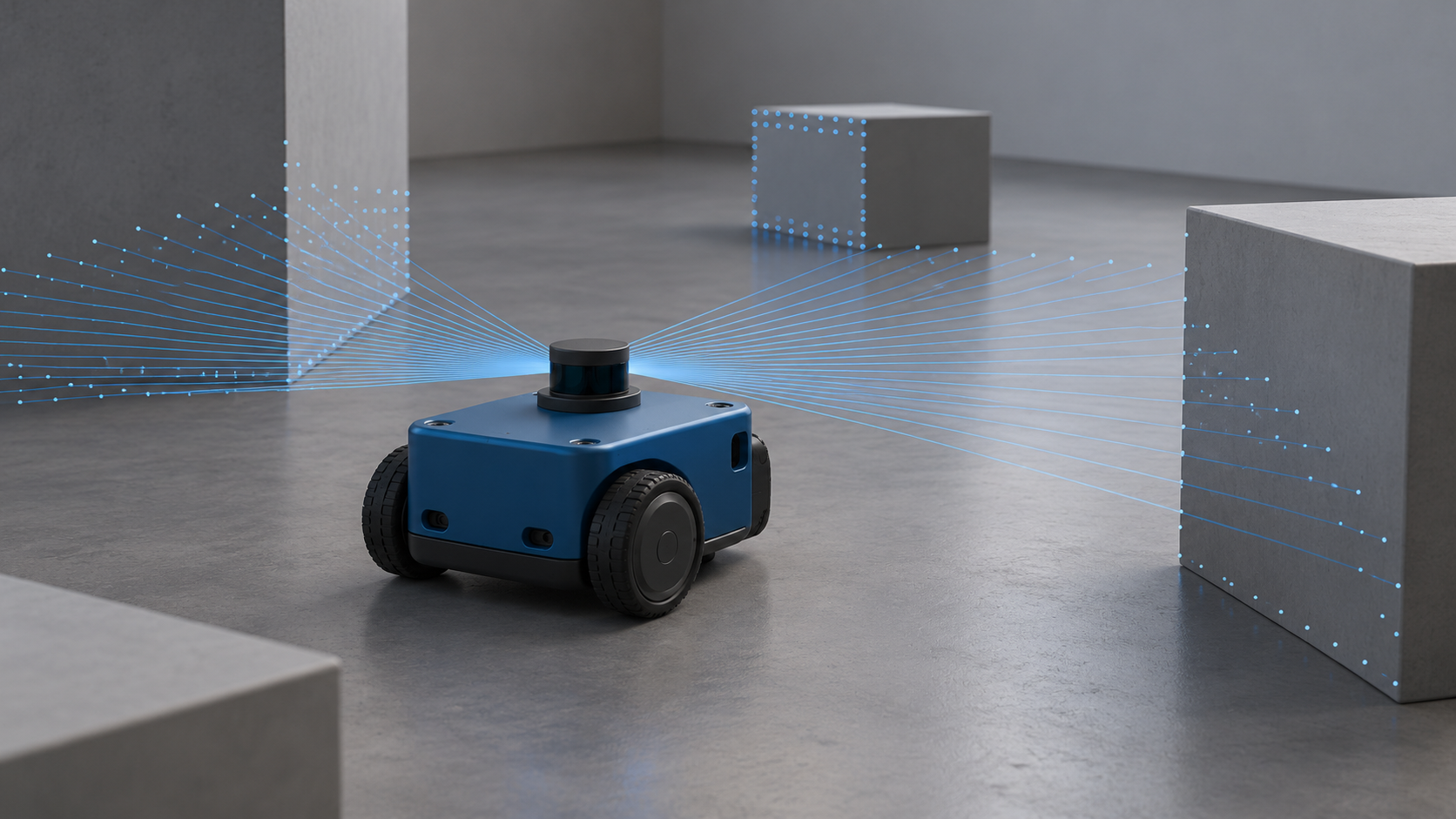
And the AI, bless it, doesn't automatically know your hardware exists. Ask it to "build me a robot that avoids obstacles" in one breath, and it will hand you five hundred confident lines of code for a robot that isn't yours, running on a microcontroller it assumed rather than asked about, with zero idea your battery is one bad solder joint from becoming a small, sad grenade.
None of that means give up. It means the request was wrong. "Build me a robot" is not an engineering brief, it's a wish. And AI, like a genie, will grant it exactly as literally and unhelpfully as possible…
Because Actual Engineering Is Apparently Optional Now
Robotics involves torque calculations, center of mass, current draw, thermal limits and vibe coding lets you skip all of it.
You just tell the AI "make the arm move smoothly" and it hands you code with a confidence level wildly disproportionate to its correctness. It's giving you PID gains like it's reading them off a fortune cookie. Sometimes those numbers work. Sometimes your robot arm develops a seizure-like tremor that looks less like "smooth robotic motion" and more like it just saw a ghost.
The other issue: real engineers test in simulation first, because simulations don't have feelings or fingers. Vibe coders, famously, do not do this, they go straight to hardware, because waiting to build a simulation environment feels like it's cutting into vibes-per-minute. This is the coding equivalent of skipping the crash test and just, you know, driving the car into the wall yourself to see what happens. Repeatedly. On purpose. While filming it for content.
Software vibe coding assumes the input is basically clean; a form field either has text in it or it doesn't. Robot sensors lie to you constantly. Your ultrasonic sensor will confidently insist there's a wall four inches from where the wall actually is. Vibe-coding a robot with no structure means vibe-coding your way through a stream of confidently wrong data which is a bit like doing your taxes based on vibes and a Magic 8-Ball.
But notice the pattern in all three of these problems: they only happen when you skip straight to code. Every single one of them has a fix, and the fix isn't "abandon AI" it's "give the AI a job that isn't 'do everything."
What Actually Works
Here's the workflow that saved me, basically lifted straight from how actual robotics engineers structure a build: Idea → Architecture → Code → Test → Debug → Working Robot. Instead of one mega-prompt, you run it in stages:
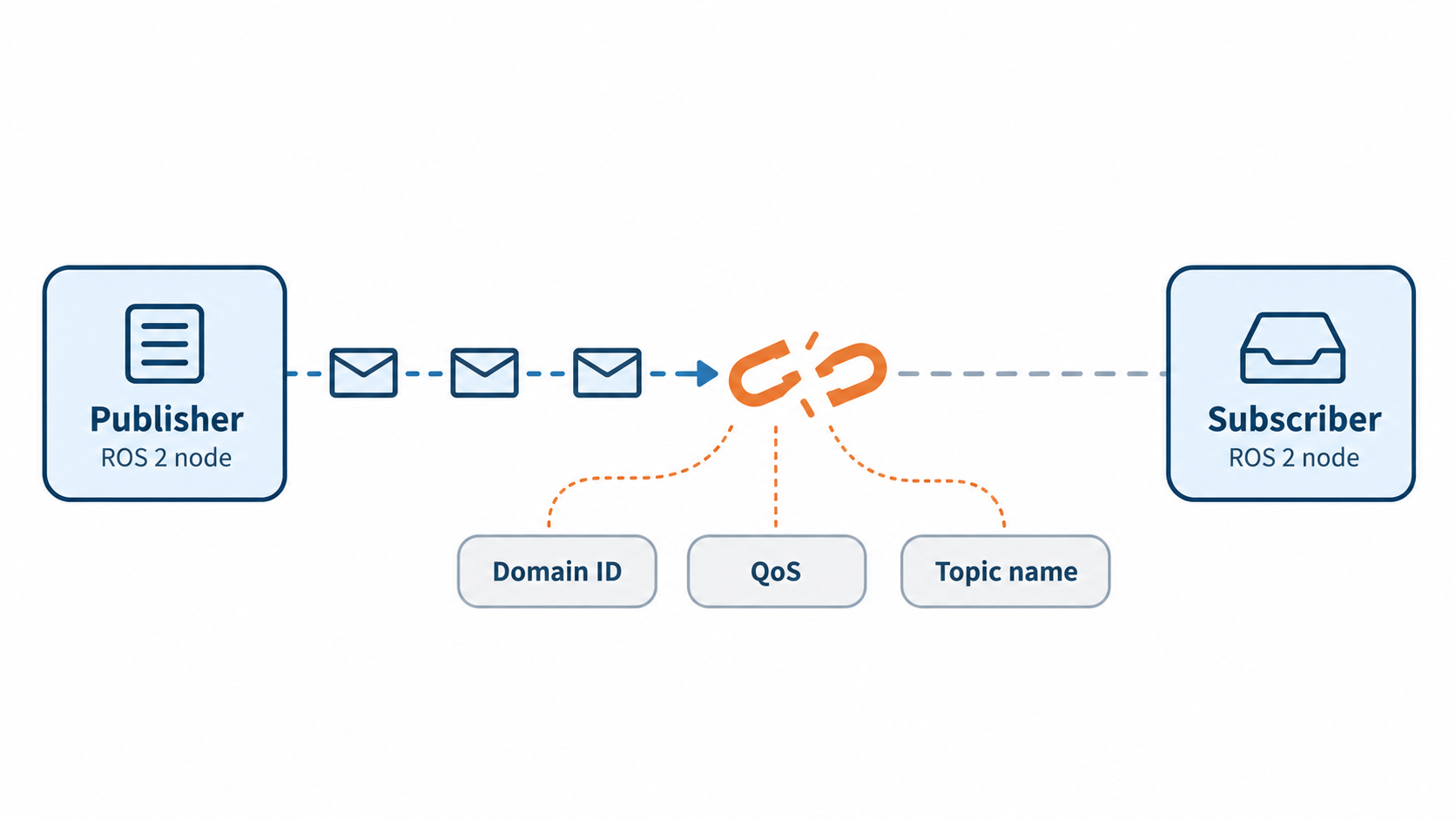
The Architect : before any code, get the full ROS 2 node breakdown: responsibilities, topics, message types, rates, and a data-flow diagram. This alone would've saved me my houseplant.
The Node Builder : build one node at a time, not 500 lines in one apocalyptic dump. Minimal, readable, testable before the next piece exists.
The Debugger : when it breaks (it will), you don't ask for a rewrite. You paste the exact error and get the actual root cause, not a guess dressed up in confidence.
The Integrator : wire the working nodes together with a proper launch file instead of duct-taping them at 1am and hoping.
The Simulator : test in Gazebo before real hardware touches anything sharp, hot, or expensive. Groundbreaking concept: crash the simulation, not your actual robot.
The Reviewer : before it runs on real hardware, get it checked for blocking calls, missing error handling, and anything that could make the robot behave dangerously.
The Hardware Bridge : wiring, pin maps, URDF skeletons, the actual mechatronics-to-code handshake.
High-level logic? Genuinely great when scoped this way. "If the sensor sees something within 10cm, stop and back up", the AI writes that kind of state-machine logic fast and clean, and it's honestly better organized than what I would've scribbled at 1am fueled by spite and energy drinks.
Boilerplate for talking to hardware? Also great. Wiring up a motor driver library, setting up serial communication, writing the scaffolding to read a sensor, this is the exact kind of "I've seen this pattern ten thousand times" task AI eats for breakfast. Getting a basic ROS 2 node up and publishing sensor data, which normally involves three tabs of documentation and a small existential crisis, took minutes instead of hours.
Where it still needed a human: real-world tuning - motor speeds, sensor thresholds, timing delays. The AI can suggest a number, but you're the one standing there with a screwdriver, nudging values by trial and error, because physical reality doesn't take suggestions from a chatbot. That's fine. That's the job. The golden rule, straight out of the playbook: you decide what the robot needs to do, the AI just gets you there faster. You stay in the driver's seat. It stays the tool.
The Final Verdict
Can you vibe-code a robot? Yes, if by "vibe-code" you actually mean "structure the build, one stage at a time, and let AI carry the parts that are genuinely tedious." Should you type "build me an obstacle-avoiding robot" and walk away? Absolutely not, unless you enjoy returning to find your robot has wedged itself under the couch, wheels spinning, fully convinced it's making great progress.
Used right, AI is a fantastic co-pilot for the "thinking" parts of a robot, the architecture, the logic, the boring glue code nobody wants to write by hand. It's also legitimately useful for the "doing" parts, as long as you keep the human in the loop for anything with torque, timing, or your furniture's structural integrity.
The real lesson isn't "AI can't build robots." It's that AI plus a real engineering workflow builds robots. AI plus vibes builds a projectile. Architect first. Build in stages. Simulate before you trust it near anything alive. Do that, and the difference between "vibe coder" and "robotics engineer" gets a lot smaller than either side wants to admit.