Every engineer remembers the first time they blew something up or burnt a motor. Maybe it was a circuit that sparked the moment power was connected, a motor that gave off a worrying smell, or a prototype that simply refused to move. At the time it felt like a failure. Looking back, it was often the moment engineering truly clicked.
That moment teaches something no textbook does. It shows that engineering is not about getting everything right the first time, but about the excitement of trying, failing, diagnosing what went wrong, fixing it, and finally watching something you built come to life. The satisfaction of that first working project stays with you long after the formulas fade.
That single idea is the reason My Equation exists. We wanted every learner, whatever their background or access to resources, to experience that spark for themselves. Here is how it started, where it is going, and why the journey is only getting more interesting.
The Vision That Brought Us Here
Engineering is fundamentally about solving problems, whether that means making a machine move, automating a repetitive task, or turning an idea into something that works in the real world. Yet learning it often feels limited to textbooks, diagrams, and theoretical explanations.
Understanding how a robot works is important. But building one is a completely different experience. We wanted to bring these two worlds closer. My Equation began with the belief that learners deserve more than an understanding of engineering concepts. They deserve opportunities to apply them, make mistakes, and discover what they’re capable of building. When theory and hands-on practice come together, learning becomes more engaging, more memorable, and far more meaningful.
Opportunities We Created
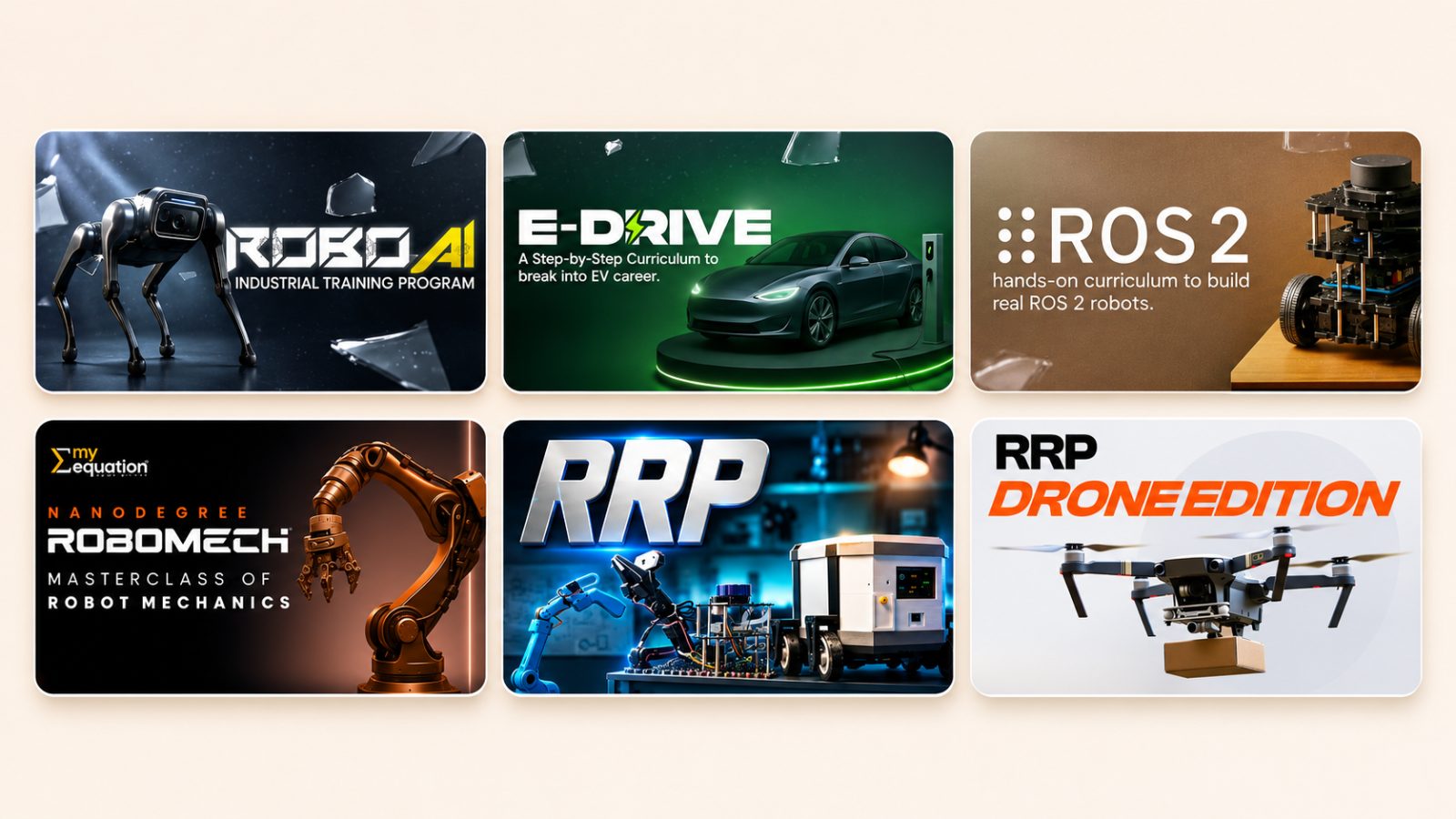
Our first step towards our vision was creating industry-focused training programs that help learners explore engineering through practical applications.
Industrial Training Programs like RoboAI, eDrive and our ROS 2 Nano Degree introduced learners to specialised fields, relevant tools and technologies used in real-world engineering. But we wanted to take the experience further.
That led to the Resident Robotics Program (RRP), a 15-day offline robotics training experience where participants get to work with hardware, explore robotics technologies and build projects themselves.
What started in Ahmedabad gradually grew beyond one city. We successfully completed three RRP batches in Ahmedabad and another in Vadodara. And we kept growing. With the RRP Drone Edition, we took things a step further, giving participants the opportunity to explore drone technology and build drones themselves.
Each new batch, location and edition opened another opportunity for learners to experience engineering beyond theory.
Removing the Barriers Between Ideas and Execution
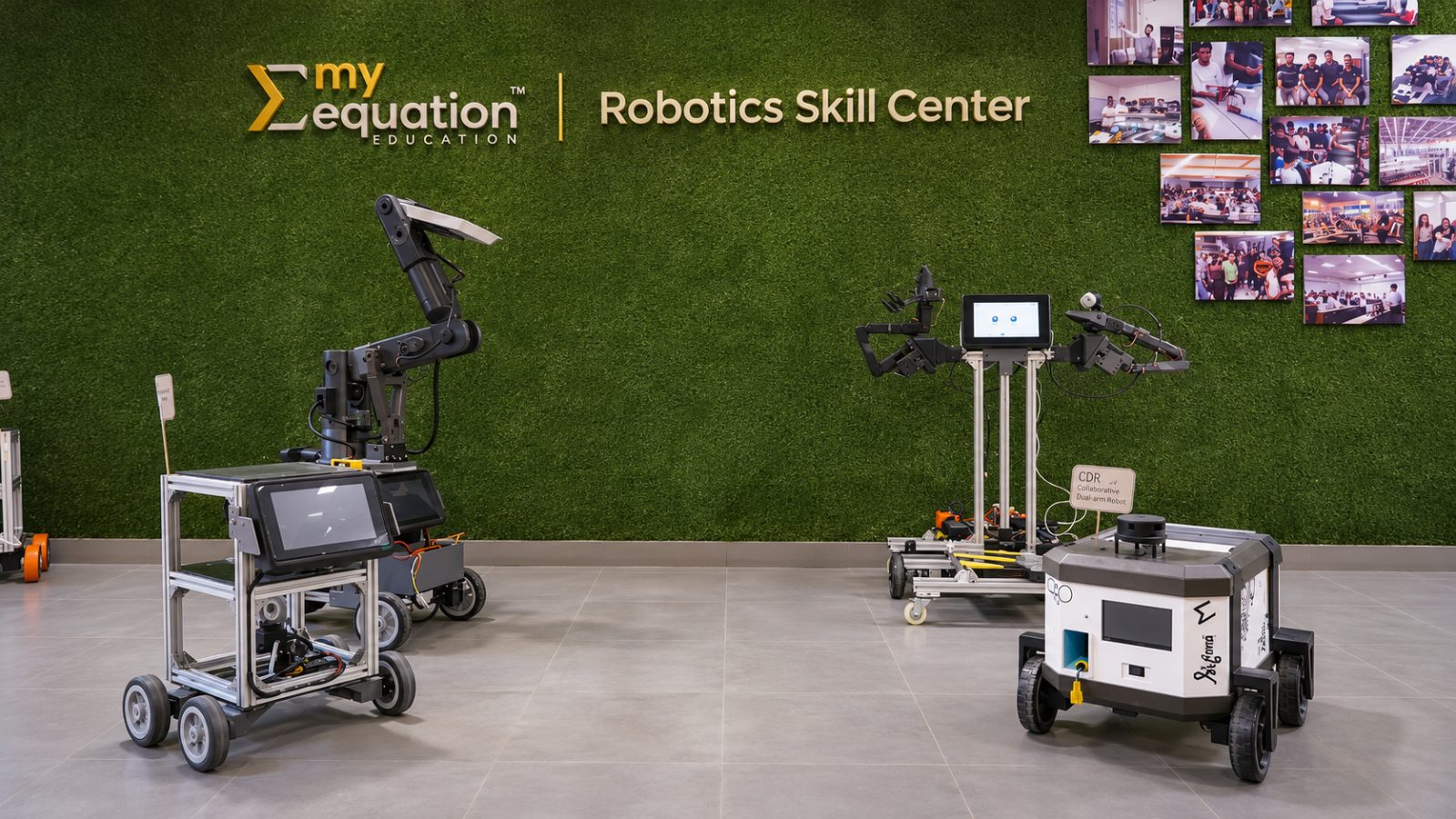
A vision without a place to live is just a nice sentence. So it needed a home.
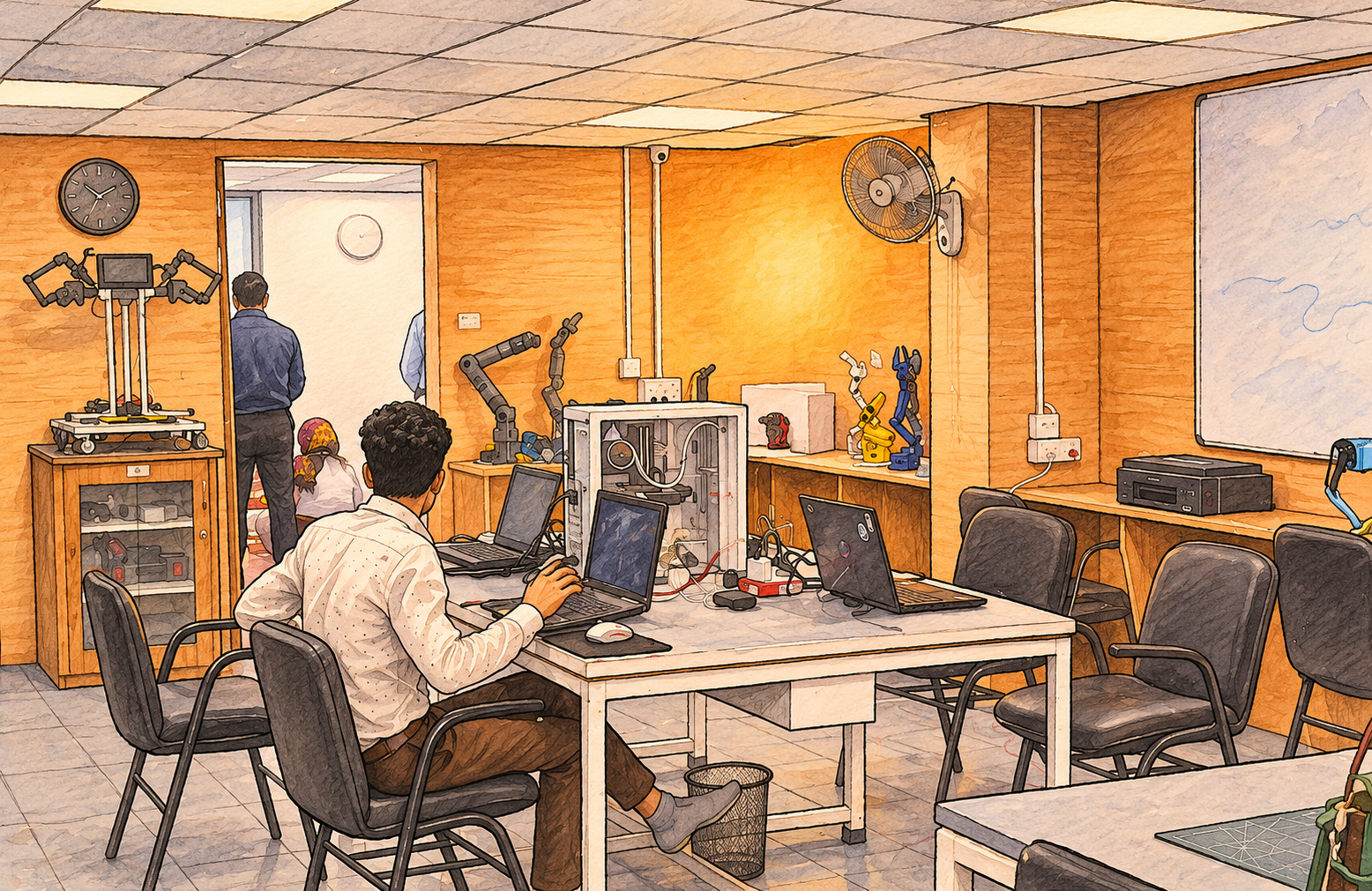
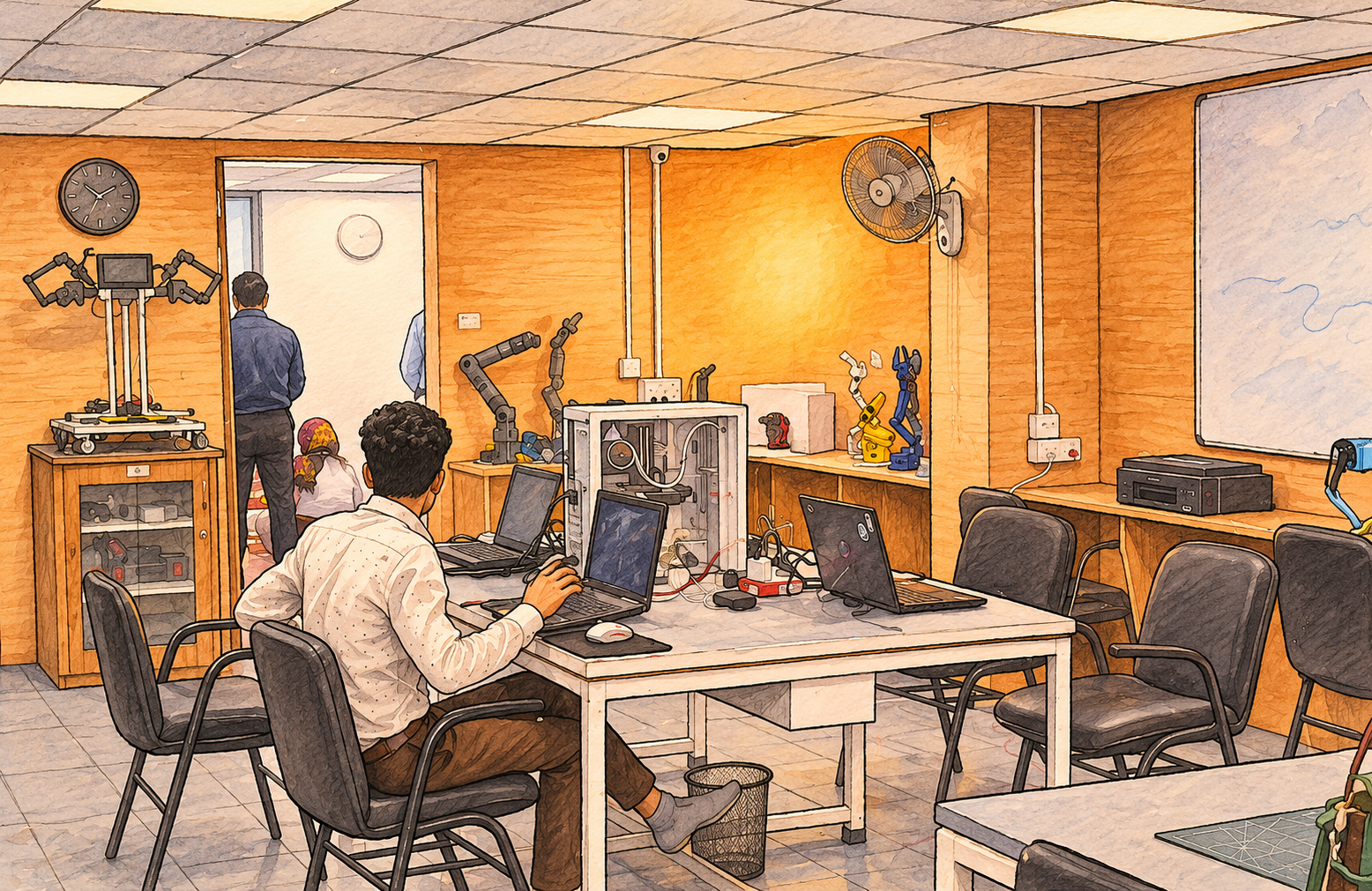
The Center of Excellence is built for exactly that. It's a dedicated environment with a clear purpose: to make robotics education more accessible, practical and connected to real-world applications.
Here is what it opens up:
Learning by building. Less "memorize this," more "make this work," with theory alongside every project.
A safe place to fail. If you have never burnt a component, have you even done electronics? Better to burn it here, with guidance, than alone.
Real-world readiness. Classrooms teach theory brilliantly. The Center helps turn it into skills that employers, startups, and innovators actually need.
A community of builders. Engineering is far more fun when there are other humans around to celebrate your results, or laugh (kindly) at your wiring.
For many students, this is the first time engineering stops being a subject and starts being an experience. And that shift changes how they see themselves.
Making the Right Hardware Easier to Access
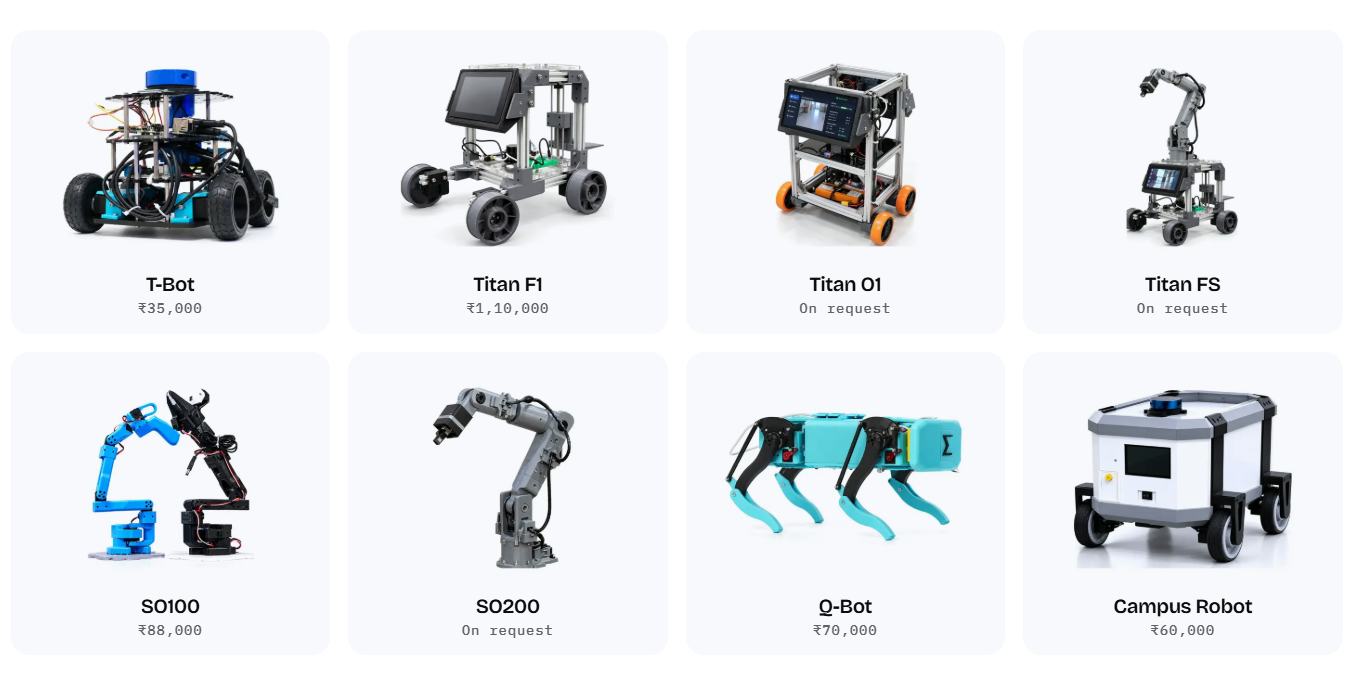
Ideas need materials, and this is where shop.myequation.in comes in.
Our newly launched website offers components, kits, and everything needed to turn a concept into a working prototype. Now, a fair question: doesn't everyone sell components these days?
Yes. Anyone can list a product, snap a photo, and click "ship." There is no shortage of places to buy a motor. That is exactly why simply selling was never the goal.
Consider what usually happens. A kit arrives. The box is opened, wires are connected, steps are followed, confidence is soaring. Then one small mistake: a wire in the wrong pin, a connection that looks fine but is not. Poof. The motor goes silent, and so does the confidence.
In most places, that is where the story ends. That is exactly where the real work begins.
Hardware is different from software. A software mistake shows an error message. A hardware mistake shows smoke, or worse, nothing at all. Silence is the scariest debugging message there is.
So the experience continues long after checkout:
Guidance during setup. Not sure where a wire goes? Ask before finding out the hard way.
Support when something fails. "It is not working" is a perfectly valid place to start, and help is a message away.
A learning-first approach. The goal is not just a working project, but understanding why it works, so the next one goes smoother.
Fewer burnt motors. This is the unofficial success metric. A world with fewer tragic motor funerals is a better world.
Anyone can sell a bicycle. The difference is being there to teach the ride, and to hand over a bandage and say "let's try again" after the first fall.
Making Engineering Possible for More People
Behind all of this sits one belief: the biggest barrier to engineering is not intelligence. It is access and confidence.
Plenty of capable people never build anything, not because they cannot, but because the first failure felt like proof they were not "an engineer." One burnt component, one confusing circuit, and they quietly decide it is not for them.
That is the story this journey is trying to change. Failing at hardware is not a sign of being bad at engineering. It is the process. Every engineer worth admiring has a graveyard of fried boards and mysteriously dead chips behind them.
That is the experience being built for the students, curious beginners, hobbyists, working professionals and anyone with an idea who has ever wondered if engineering is for them.