
Robotics has quietly become one of the most exciting fields in engineering. Humanoids are walking out of research labs and into warehouses, and open-source robotics software has matured to the point where a motivated beginner can build a working robot without a six-figure budget. If you've been wanting to break into robotics, 2026 might be the best year yet to start. This roadmap is built for beginners and intermediate learners who want practical skills, not just theory, and it prioritizes free and open-source tools throughout.
1. Start with the Essentials
Before touching robots, master the foundations everything else rests on. It's tempting to skip straight to building, but engineers who progress fastest almost always invest real time here first.
Mathematics. You don't need a PhD, but you do need intuition for linear algebra (vectors, matrices, transformations), basic calculus, and probability for sensor fusion. These show up constantly in kinematics, control, and state estimation. MIT OpenCourseWare's Linear Algebra (18.06) and Probabilistic Systems Analysis (6.041) are free and directly applicable.
Programming. Python is the fastest entry point and dominates prototyping, ROS 2 nodes, and AI training. C++ is non-negotiable for real-time control loops and performance-critical code. Learn both, and invest in clean code and Git habits, since robotics code often runs for hours at a stretch, where sloppiness gets expensive fast.
Linux and the command line. Almost every serious robotics stack runs on Ubuntu. Get comfortable with the terminal, package management, and basic networking, since most tutorials and deployment environments assume this baseline.
Basic electronics and mechanics. Understand sensors, actuators, motors, and simple circuits. You don't need to design PCBs on day one, but you should know how a motor driver works and why voltage, current, and torque matter. For mechanics, grasp forward and inverse kinematics conceptually, even before you can derive them.
These essentials typically take four to eight weeks of focused effort. Skip them and confusion in later, advanced topics usually traces back to gaps that should have been closed here.
2. Learn the Robotics Tech Stack
Once the fundamentals are solid, learn how robots are actually built: sensors, actuators, embedded controllers, and the software tying them together.
Microcontrollers and embedded basics. Arduino and the Raspberry Pi Pico are the cheapest entry points, both with extensive open documentation. Learn to read sensor data from ultrasonic sensors, IMUs, and encoders, and to drive servos, DC motors, and stepper motors in response.
Single-board computers. Move to single-board computers like the Raspberry Pi, which run a full Linux stack and handle heavier processing camera input, networking, and eventually ROS itself. This is usually where a hobby project starts to feel like a real robotics system.
Control systems. Spend real time here, especially on PID control, arguably the single most useful concept at this stage. It shows up everywhere from balancing robots to drone stabilization, and the open-source article PID without a PhD by Tim Wescott remains one of the best plain-language introductions available.
Get comfortable with Git and Linux command-line work here too, since nearly every robotics tool from this point forward assumes familiarity with both.
3. Master AI, ROS & Simulation
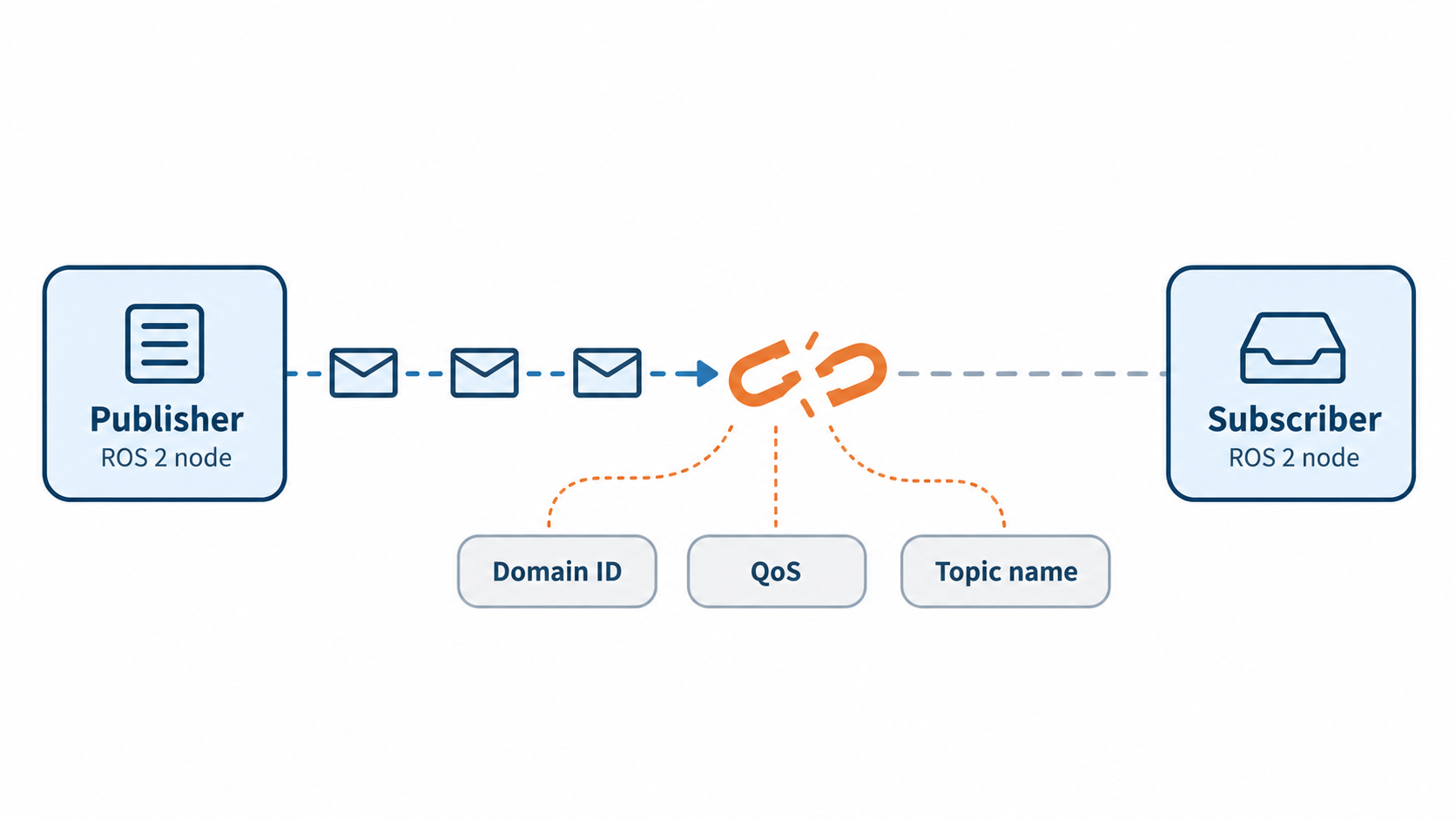
This is where robotics starts to feel like robotics. ROS 2, the current generation of the Robot Operating System, is the industry-standard middleware, handling communication between sensors, controllers, and algorithms through a publish-subscribe architecture.
Learning ROS 2. Start with the official documentation and tutorials at docs.ros.org, free and actively maintained, and work through nodes, topics, services, and actions before moving on.
Simulation environments. Move to a simulator like Gazebo or NVIDIA Isaac Sim, where you can test robot behavior without physical hardware. A bug in simulation costs nothing; a bug on real hardware can break a motor or worse.
AI for robotics. Three areas matter most. Computer vision handles perception, and OpenCV remains the standard open-source library for it. SLAM (Simultaneous Localization and Mapping) handles navigation, and packages like Cartographer and RTAB-Map are strong starting points. Reinforcement learning increasingly handles control policies now that sim-to-real transfer is more reliable, and resources like OpenAI's Spinning Up and Stable-Baselines3 make it approachable.
You don't need to master deep learning theory. You need enough to use pretrained models, fine-tune them, and integrate them into a ROS pipeline without treating the model as a black box.
4. Learn with Open-Source Tools
One of the best things about robotics in 2026 is how open the ecosystem is. You can build a serious skill set without spending money on proprietary software or expensive hardware, as long as you know where to look.
Software tools. ROS 2 handles middleware, Gazebo and Isaac Sim handle simulation and physics, OpenCV handles vision, and the Point Cloud Library handles 3D perception and LiDAR data. MoveIt covers motion planning for arms, while Blender helps with creating and modifying 3D robot models. PyTorch and Hugging Face's Transformers matter once you start training or fine-tuning models. Nav2 builds on ROS 2 for autonomous navigation, handling path planning and obstacle avoidance out of the box. OctoMap offers lightweight 3D occupancy mapping, Webots is another free simulator worth comparing against Gazebo, and URDF/Xacro is the format you'll use constantly to describe your robot's physical structure.
Hardware and electronics design. FreeCAD and OnShape's free tier cover mechanical design, and KiCad handles electronics once you start designing your own boards. Fritzing and the open-source LTspice are useful for testing circuits before you build them.
Open hardware platforms. Low-cost platforms like TurtleBot, Hugging Face's LeRobot project, and open quadruped designs like Stanford's Pupper let you apply what you're learning without an industrial robot arm in your garage. LeRobot has become a major hub in 2025–2026 for open-source robot learning models, datasets, and affordable hardware. Beyond those, Robotis OpenManipulator offers an affordable arm for learning manipulation, DonkeyCar is popular for small autonomous vehicles, and PX4 and ArduPilot are the dominant open-source flight-control stacks for drones. For legged robots, MIT's Cheetah-Software and Unitree's open SDKs are worth studying even without building the hardware, since the control code is instructive on its own.
The goal isn't just using these tools, but getting comfortable reading their source and documentation robotics debugging often means digging into a library's internals.
5. Build Projects That Matter
Tutorials only take you so far. At some point you need to build something with an actual goal, not just follow a guide. This is where real learning happens, because projects force you to combine skills from every previous stage at once.
Beginner: A line-following or obstacle-avoiding robot built around basic sensors and PID control is a good start simple enough for a weekend, but it touches sensing, actuation, and control together.
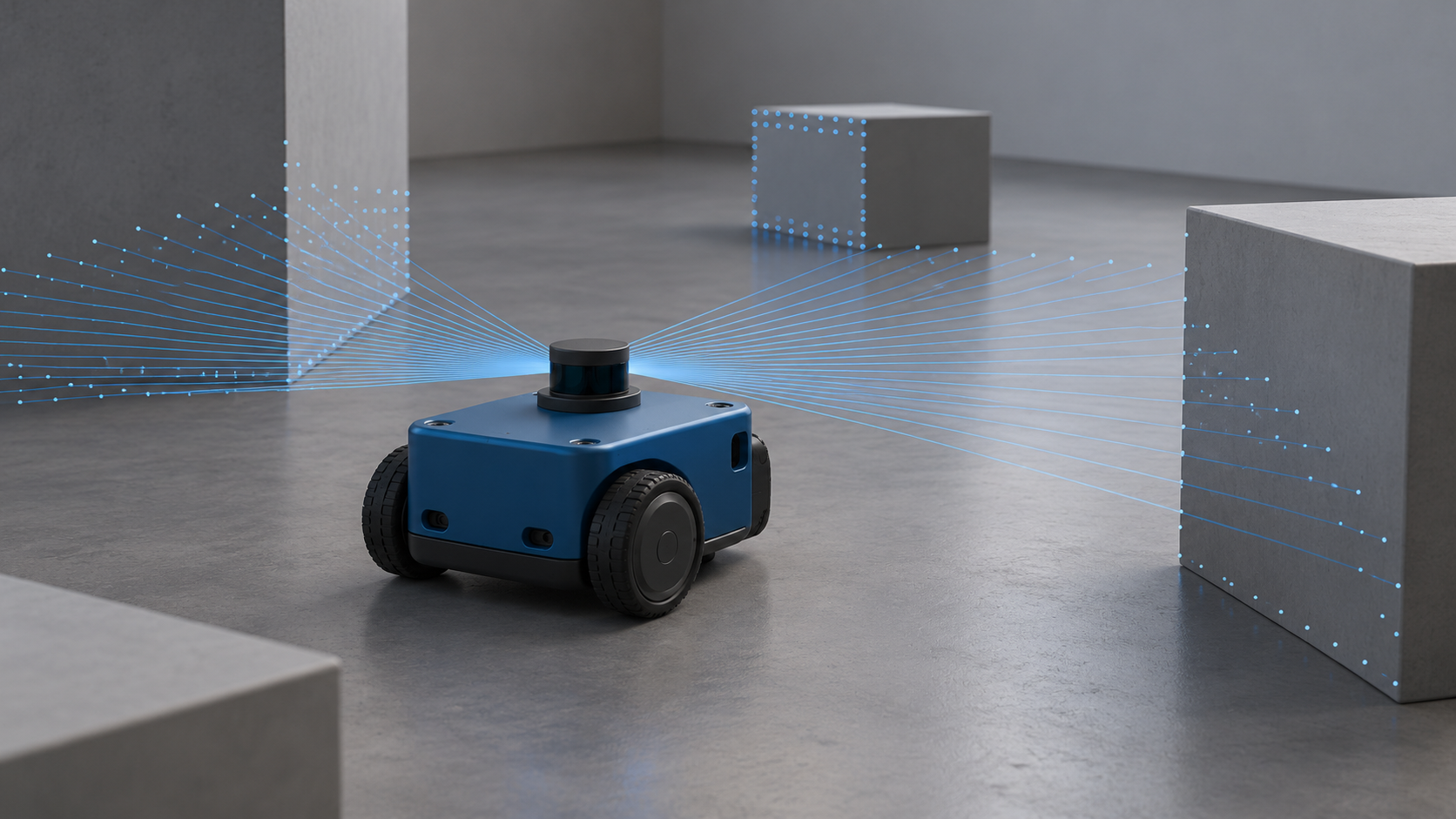
Intermediate: Try a SLAM-based mapping robot using a low-cost LiDAR, or a robotic arm that picks and places objects using computer vision for detection.
Advanced: A quadruped or bipedal robot using reinforcement learning for gait control will stretch nearly everything you've learned.
If building from scratch feels daunting, contributing to an existing open-source robotics project on GitHub is often the fastest way to absorb production-quality practices. And whatever you build, document it publicly, on GitHub or a personal blog a portfolio of real, working projects, even imperfect ones, is often more persuasive to employers than a list of completed courses.
6. Choose Your Robotics Career Path
Robotics isn't one career it's a cluster of overlapping specializations, and as you build skills you'll likely gravitate toward one of several directions.
Software and perception roles. Robotics software engineering builds the ROS-based stacks that control robot behavior. Perception and AI roles center on computer vision, sensor fusion, and machine learning for autonomy.
Hardware and controls roles. Mechatronics and hardware engineering deals with the physical robot actuators, sensors, mechanical structure. Controls engineering is the mathematics of how robots move and stabilize themselves.
Research and applied industry roles. Research pushes the boundaries of what robots can do, typically requiring graduate study. Applied robotics in industry means deploying robots in warehouses, manufacturing, agriculture, or healthcare, where reliability and integration matter more than novel algorithms.
None of these paths are mutually exclusive early on, and the open-source ecosystem makes it easy to sample all of them before committing. The engineers most in demand right now tend to be generalists who understand the full stack, even if they eventually specialize.
Final Thoughts
The barrier to entering robotics has never been lower. Between free coursework, open-source middleware like ROS 2, simulation environments that remove the need for expensive hardware, and communities like Hugging Face's LeRobot lowering the cost of real experimentation, 2026 is a genuinely good time to start. The roadmap is straightforward fundamentals, tech stack, AI and simulation, open-source tools, real projects, and eventually a chosen specialization but real progress comes from consistently building things, not just reading about them. Pick a small project today, and let the roadmap unfold from there.