What Is Sim-to-Real Transfer in Robotics?
In a simulated world, building a robot is almost suspiciously easy. The floor has predictable friction, sensors provide clean data, motors respond exactly as expected, and obstacles politely stay where engineers put them. A robot can practice the same task thousands of times and achieve impressive results.
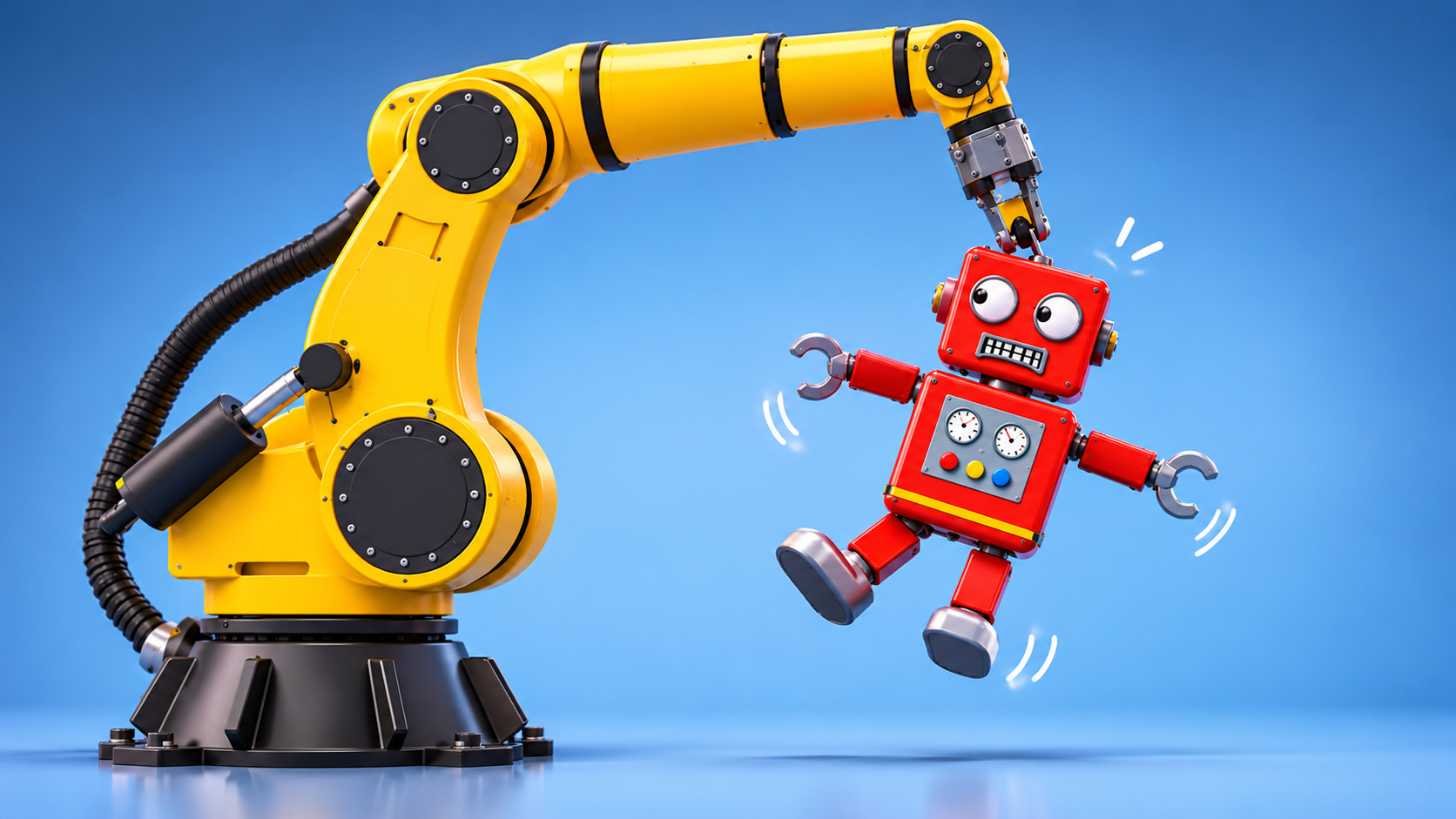
Unfortunately, nobody told the real world to behave the same way. Physical robots deal with sensor noise, mechanical imperfections, unexpected obstacles and environmental conditions that even the best simulation might not fully reproduce. And that's a problem. Because a robot that performs perfectly on a computer screen isn't necessarily ready to perform on a factory floor.
This gap between virtual success and physical performance is why engineers rely on a technique called Sim-to-Real Transfer.
1. What Is Sim-to-Real Transfer?
Sim-to-Real Transfer is the process of taking skills, behaviors or control policies learned by a robot in a simulated environment and applying them to a physical robot. Instead of testing every movement directly on expensive hardware, engineers first create a virtual version of the robot and its surroundings. The robot can practice tasks, learn from mistakes and improve its performance without physically damaging equipment. Once its behavior becomes sufficiently reliable, the learned control policy is transferred to the actual robot.
Think of it as learning to drive using a simulator before getting behind an actual steering wheel. You might understand acceleration, braking and steering, but real roads introduce uneven surfaces, unexpected turns and traffic that doesn't follow your practice schedule.
In robotics, the same principle applies. A simulated robotic arm might learn to pick up objects, while an autonomous mobile robot learns to navigate a warehouse. The objective is to develop useful behavior virtually before deploying it in the physical world. Sim-to-real transfer is particularly important in reinforcement learning, robotic manipulation, autonomous navigation and humanoid robotics. However, there's one important catch: a simulation is only a mathematical representation of reality, not reality itself.
2. How Robotics Simulation Works
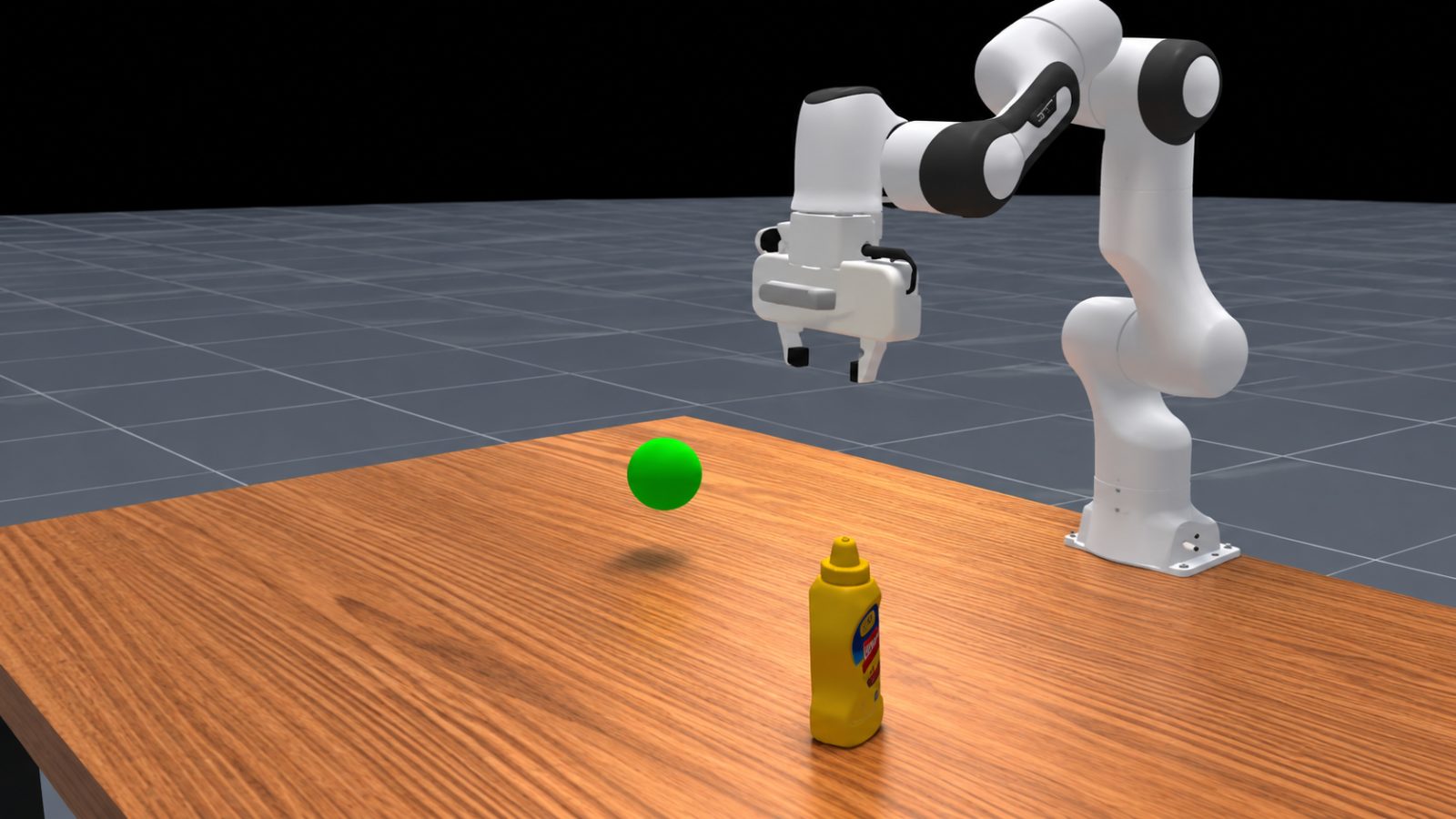
Before a robot can learn inside a simulation, engineers need to create a virtual environment that represents its physical system. This involves modelling the robot's structure, defining its surroundings and configuring a physics engine that determines how everything interacts. A digital robot model includes its links, joints, dimensions, mass, motors and sensors. Engineers commonly use formats such as URDF (Unified Robot Description Format) to describe a robot's physical structure and connections.
Next comes the simulated environment. This could be a factory floor, warehouse, obstacle course or laboratory containing objects the robot needs to interact with. The physics engine handles calculations behind gravity, collisions, friction, forces and movement. Without it, a virtual robot could pass through walls, float above surfaces or lift objects without accounting for their weight. Entertaining, perhaps, but not particularly useful for engineering.
Consider a robotic arm designed to pick up metal components. Engineers can create its virtual model, position a simulated component on a table and train the arm to identify, approach and grip it. The robot can repeat this task thousands of times, experiment with different movements and improve its performance.
This is one of the biggest advantages of simulation. Engineers can run repeated experiments without constantly resetting physical equipment, replacing damaged components or worrying about every failed movement.
3. How Engineers Bridge the Sim-to-Real Gap
Engineers use several techniques to make simulation-trained robots more reliable when transferred to physical hardware. One widely used approach is Domain Randomization.
Instead of training a robot in one perfectly controlled virtual environment, engineers deliberately change different simulation parameters during training. A robotic arm, for example, might practise picking up objects with different shapes, sizes, weights, positions and orientations. Engineers can also vary lighting conditions, surface friction, camera settings and other physical properties.
The robot encounters enough variation that it cannot depend on one specific environment or set of conditions. It has to learn behaviors that work across different possibilities. Imagine practicing a sport on different surfaces instead of training on the same perfectly smooth court every day. When conditions change, you're more likely to adapt. Domain randomization follows a similar principle. It encourages robots to develop robust behaviors instead of memorizing one specific simulated environment.
Another technique is Dynamics Randomization, where physical parameters such as mass, friction, damping and motor strength are varied during training. This helps robots handle differences between their simulated physics models and actual physical systems. However, sometimes making the simulation more unpredictable isn't enough. Engineers also need to understand how the physical robot actually behaves. This is where System Identification becomes important.
System identification is the process of estimating a system's physical and dynamic properties using observed inputs and outputs.
Another approach is Real-World Fine-Tuning. After transferring a trained policy to physical hardware, engineers collect real-world performance data and use it to refine the robot's behavior. This allows the robot to adapt to differences that weren't fully captured during simulation.
In practice, sim-to-real systems often combine domain randomization, system identification and real-world fine-tuning rather than relying on one technique alone.
4. Where Is Sim-to-Real Transfer Used?
Sim-to-real transfer has applications across several areas of robotics, particularly where physical testing is expensive, repetitive or risky.
Robotic manipulation: Robotic arms need to grasp, lift, sort and position objects with different shapes, sizes and orientations. Simulation allows engineers to train manipulation systems using large numbers of virtual objects and scenarios. A robot can practice approaching an object, adjusting its grip and completing a movement before engineers test the learned behavior on physical hardware. This is useful in manufacturing, packaging and material handling.
Autonomous mobile robots: Warehouse robots need to move around shelves, equipment, obstacles and other moving objects without constantly colliding with them. Simulation allows engineers to test navigation strategies, sensor configurations and obstacle avoidance before deploying robots in operational environments. It also helps evaluate how a robot responds to different layouts and environmental conditions.
Humanoid robots: Humanoid robots require coordination between multiple joints, motors and sensors to maintain balance and move naturally. Training a humanoid robot to walk, recover from disturbances or perform complex movements directly on physical hardware can be expensive and risky. Simulation allows engineers to run repeated training experiments, including scenarios where the robot loses balance or encounters unexpected disturbances.
Autonomous drones: Drones need to maintain stability, navigate obstacles and respond to changing environmental conditions. Simulation allows engineers to test flight-control algorithms, navigation strategies and obstacle avoidance under different conditions without risking physical crashes during every training attempt. However, real-world flight testing remains essential because actual wind conditions, sensor limitations and hardware behavior can differ from simulated predictions.
5. Robotics Simulators Making This Possible
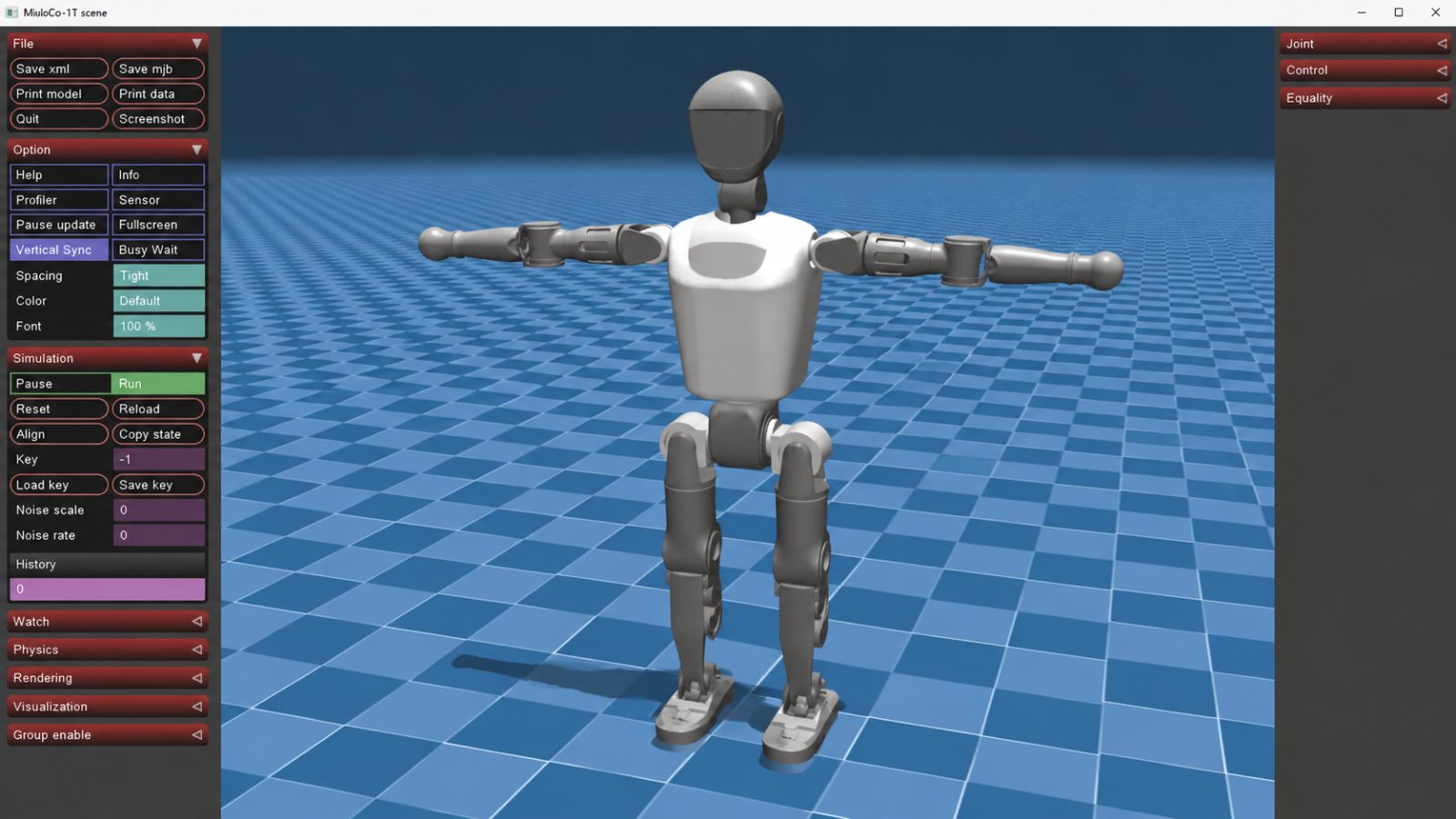
Several robotics simulators help engineers build virtual environments, train control policies and test robot behavior.
NVIDIA Isaac Sim is built on NVIDIA Omniverse and supports physics-based simulation, synthetic data generation and testing AI-powered robotic systems. It is particularly useful for developing and testing perception and manipulation applications.
Gazebo is an open-source robotics simulator widely used alongside ROS and ROS 2. It allows engineers to test robot models, sensors, physics and navigation algorithms in simulated environments.
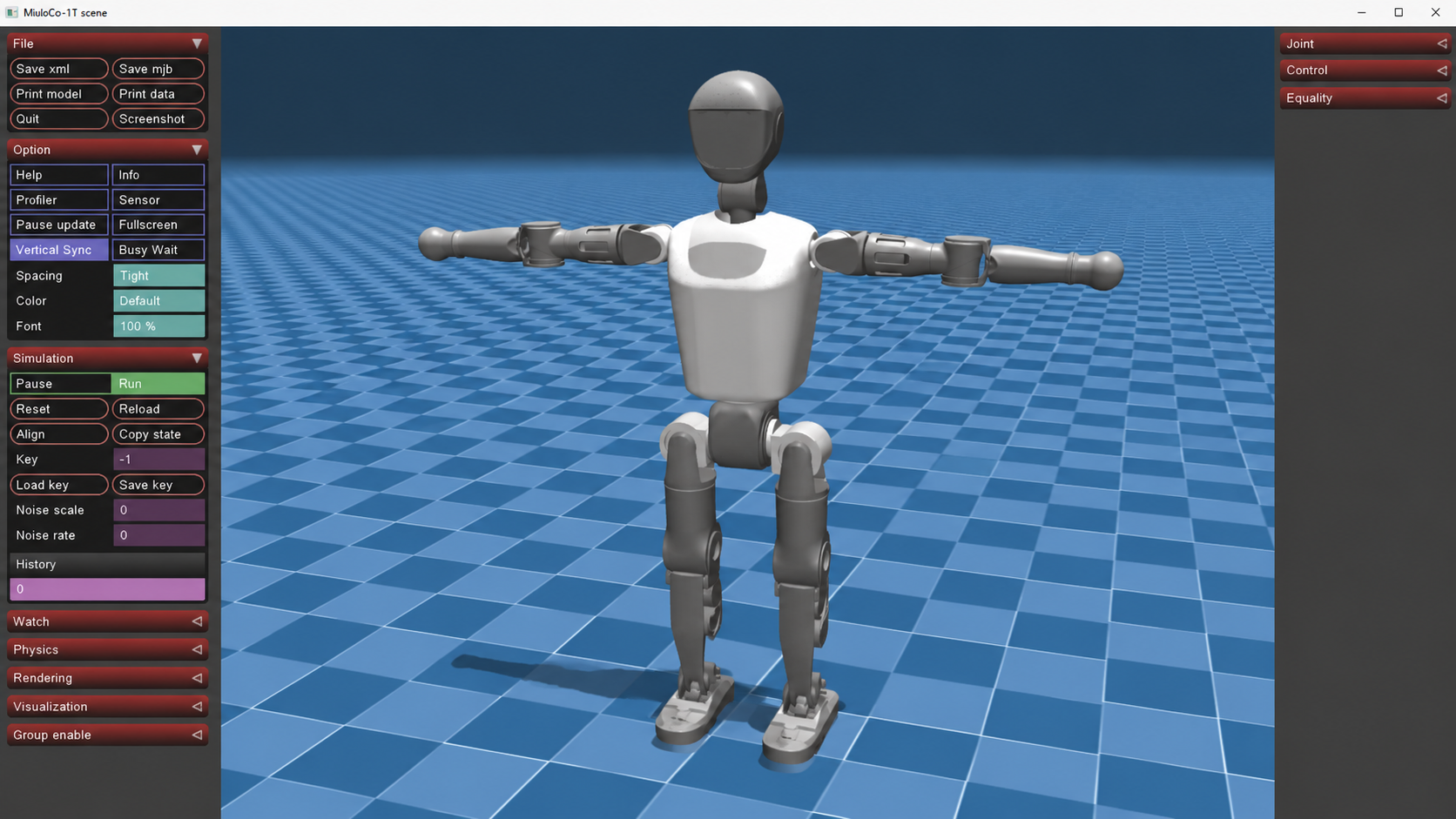
MuJoCo is a physics engine designed for efficient simulation of articulated mechanisms. It is widely used in robotics research, particularly for reinforcement learning, locomotion and robot control.
Webots is a robotics simulation environment that supports robot modelling, sensor simulation, controller development and testing. It is useful for educational projects, research and robotics prototyping.
Each platform has different strengths, but they share an important purpose: helping engineers experiment with robot behavior before committing to physical hardware.
6. Can Simulation Replace Real-World Testing?
Simulation is becoming increasingly important as AI-powered robots become more complex. One interesting development is the growing use of Digital Twins. A digital twin is a virtual representation of a physical system that can be updated using real-world data.
In industrial robotics, digital twins can help engineers monitor equipment performance, test changes and understand how robotic systems behave under different operating conditions. Another promising direction is combining reinforcement learning with simulation. Robots can practice tasks repeatedly, receive feedback based on their performance and gradually improve their control strategies.
As simulation engines, computing hardware and AI models improve, engineers will be able to test increasingly complex robotic behaviors in virtual environments. However, simulation will not eliminate the need for physical testing. Real-world validation remains essential because no virtual environment can perfectly reproduce every possible physical condition. A successful simulation is an important milestone, but it doesn't guarantee successful deployment.
7. From Virtual Training to Real-World Performance
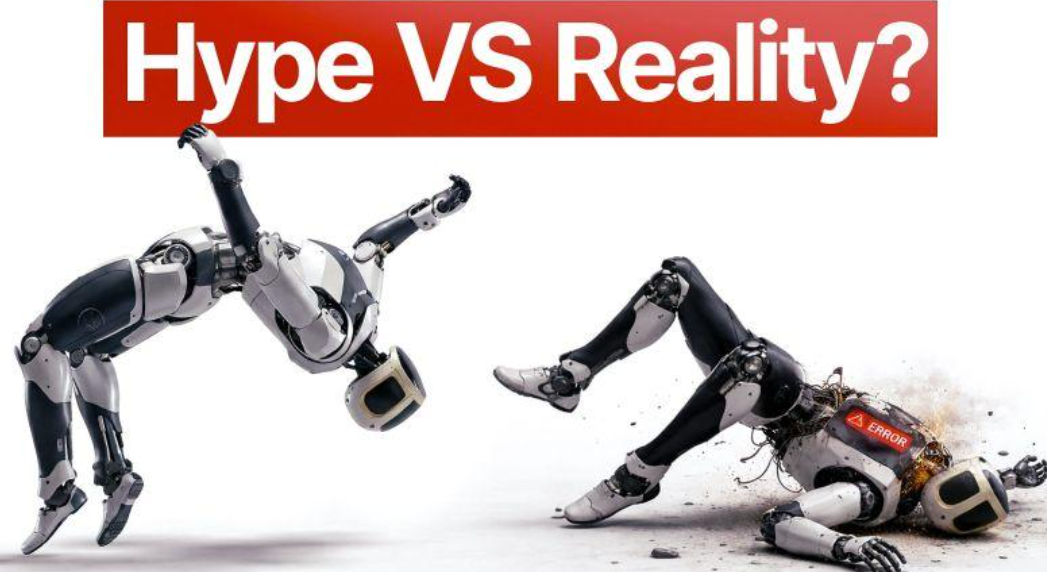
Sim-to-real transfer is about making the knowledge a robot gains in simulation useful in the physical world. It reduces the cost and risk of experimentation, allows robots to practice at scale and makes it easier to develop intelligent robotic systems. But the real challenge lies in ensuring that the learned behavior survives outside the controlled environment in which it was created.
A robot might successfully complete a thousand simulated pick-and-place tasks, but its actual performance depends on how well it handles friction, sensor noise, motor limitations and unexpected changes. And perhaps that's the most interesting part of robotics: building a robot that doesn't just work when everything goes according to plan, but continues working when it doesn't. Because in engineering, passing the simulation is impressive. Surviving the real world is the actual achievement.