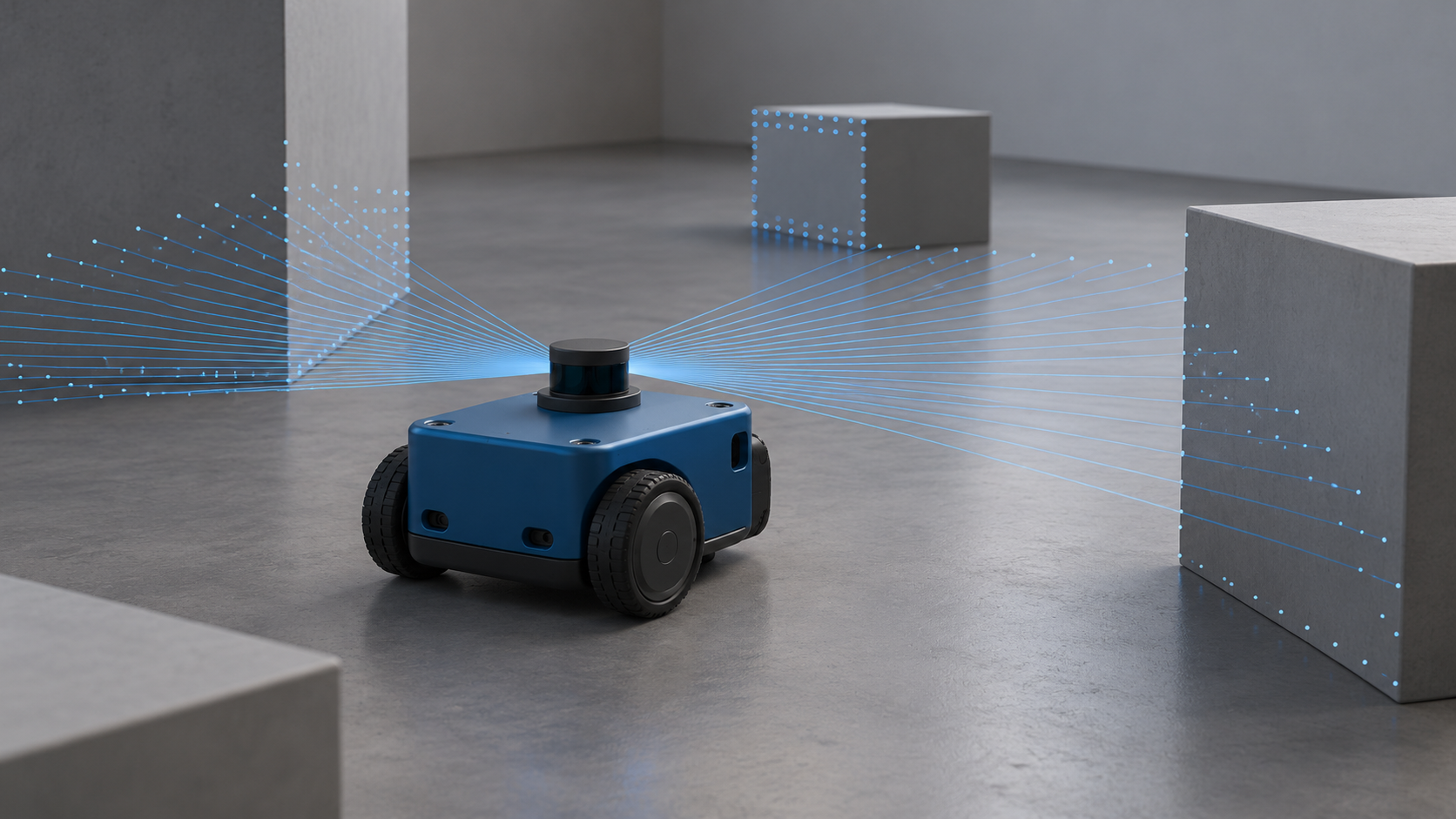

A robot arm is expected to lift objects without dropping them, move with precision and repeat the same operation thousands of times. An autonomous mobile robot must navigate factory floors, carry loads and respond to changing conditions without losing control.
Behind these movements are three essential hardware components: motors, motor drivers and controllers.
Choosing these components is not simply about selecting products with higher power ratings or faster operating speeds. Each component must match the robot's mechanical design, operating environment and performance requirements. An incorrectly sized motor or incompatible driver can affect the performance and reliability of the entire system.
Let's understand what each component does and how to select the right combination for an industrial robotics application.
1. Understanding Motors, Drivers and Controllers
A motor converts electrical energy into mechanical movement. In robotics, motors drive wheels, rotate joints, operate conveyor mechanisms and control robotic grippers.
The most commonly used types include DC motors, BLDC motors, stepper motors and servo motors. DC motors are commonly used in mobile robots and conveyor systems, while BLDC motors offer higher efficiency and durability for applications requiring continuous operation. Stepper motors are suitable for controlled positioning, whereas servo motors are widely used in robotic arms and precision manufacturing where accurate position, speed and torque control are required.
A motor driver regulates the electrical power supplied to the motor. It receives control signals from the controller and adjusts motor speed, direction and current. Different motors require different drivers. Brushed DC motors typically use H-bridge drivers, BLDC motors require electronic commutation, and stepper motors need drivers that regulate winding currents.
The controller coordinates the movement of the robot. Depending on the application, it could be a microcontroller, PLC, industrial motion controller or embedded computer. In a robotic arm, for example, the controller coordinates multiple joints and sends movement commands to the respective motor drivers.
Although these components perform different functions, their electrical and communication specifications must be compatible.
2. How to Choose the Right Motor
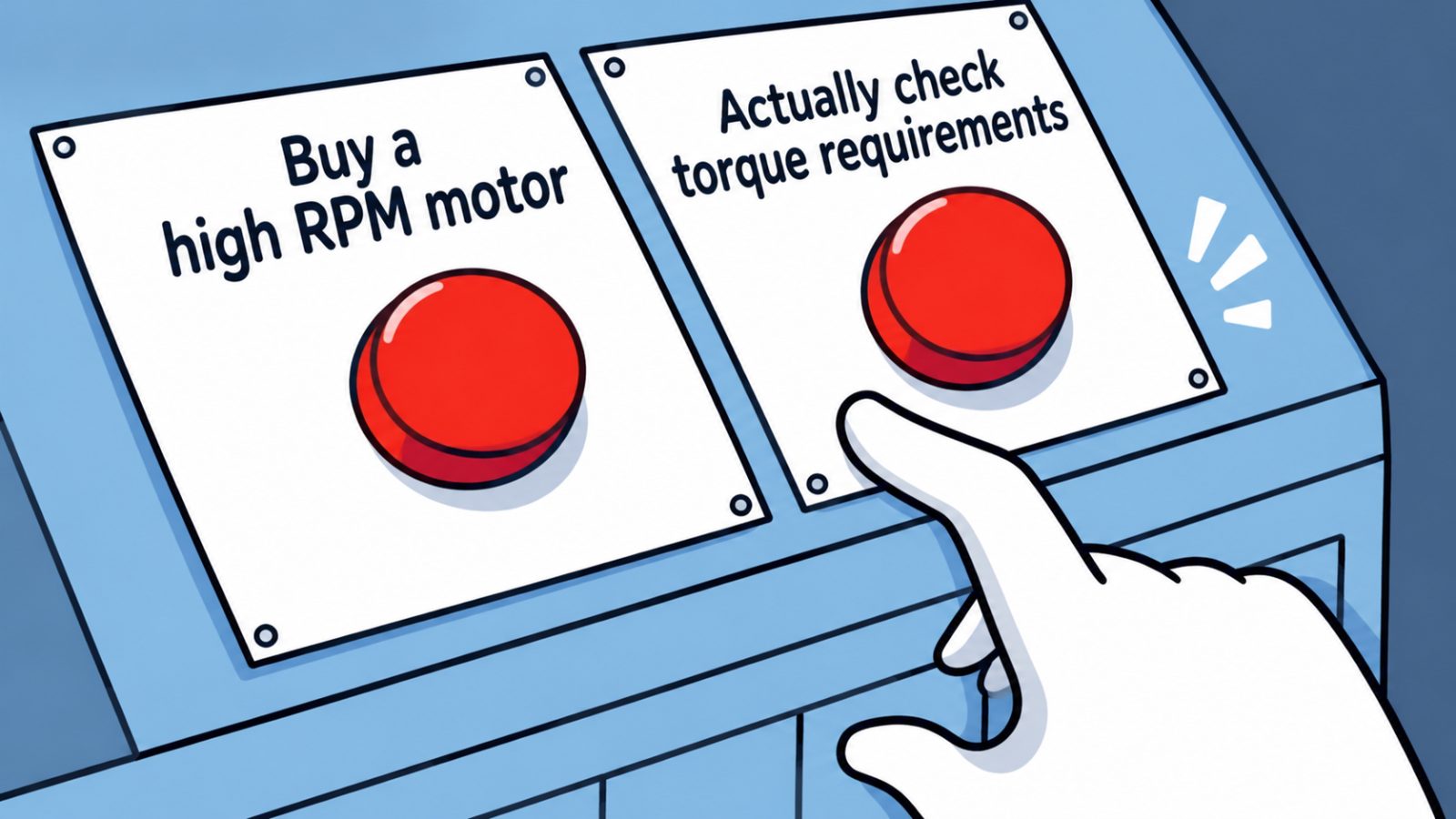
Motor selection should begin with the mechanical requirements of the robot rather than the available product catalogue. Torque, speed, power and duty cycle determine whether a motor can perform reliably under actual operating conditions.
Torque requirements
Torque determines the rotational force a motor can produce. It is particularly important when lifting objects, rotating robotic joints or moving heavy loads.
The basic relationship is:
Torque = Force × Perpendicular distance
For example, a robotic arm lifting a component must generate enough torque to support both the payload and the weight of the arm itself. Engineers must also account for acceleration, friction, gearbox efficiency and mechanical losses. Selecting a motor based only on payload weight can result in an undersized system.
Speed and power requirements
Motor speed is generally measured in revolutions per minute (RPM). A conveyor may require consistent rotational speed, whereas a robotic joint may need controlled acceleration and deceleration to reach a specific position.
Engineers should examine the motor's torque-speed curve rather than relying only on its maximum RPM. A motor's advertised maximum speed does not necessarily represent the speed it can maintain under load.
Mechanical power depends on both torque and rotational speed:
Power (W) = Torque (Nm) × Angular velocity (rad/s)
This relationship helps determine whether a motor can deliver the required torque at the desired operating speed. A gearbox can also help adapt motor speed and torque to the application. A reduction gearbox generally decreases output speed while increasing available output torque, subject to efficiency losses.
Duty cycle and operating conditions
A motor designed for intermittent operation may not be suitable for a system running continuously throughout a production shift. Frequent starting, stopping, acceleration and braking can increase thermal stress.
Engineers should consider the motor's rated duty cycle, thermal limits, cooling requirements and operating environment before making a selection. These factors directly affect motor life and system reliability.
3. Selecting the Right Motor Driver

Once the motor is selected, the next step is choosing a compatible driver. The driver must support the motor's electrical requirements and the control interface used by the controller. Voltage and current ratings are two of the most important specifications. The driver's operating voltage range must match the motor and power supply requirements. Its current capacity must also accommodate the motor's continuous operating current and peak demands during startup, acceleration or heavy loading.
For stepper motors, particular attention should be given to the driver's phase-current rating and current regulation method. Thermal performance is equally important because a driver may require additional cooling to sustain its rated current under actual operating conditions.
Communication compatibility should also be verified. Depending on the motor and automation architecture, drivers may support PWM, step-and-direction signals, CAN, CANopen or EtherCAT. For example, a stepper driver may accept step-and-direction commands, while an industrial servo drive may use EtherCAT for coordinated multi-axis control.
Industrial applications should also consider protection features such as overcurrent protection, overvoltage protection, thermal shutdown and fault monitoring. Safe Torque Off (STO) may be required in applications where functional safety is necessary.
4. Choosing the Right Controller
The controller determines how the robot processes commands, coordinates movement and responds to feedback. The appropriate choice depends on the complexity of the application.
Microcontrollers are suitable for embedded systems, smaller robotic arms and mobile robots. PLCs are commonly used in conveyor systems, production lines and industrial automation because of their reliability and integration with factory equipment. Industrial motion controllers are designed for applications requiring precise movement across multiple axes, such as robotic arms and CNC machines. Embedded computers are useful when robots require advanced processing for computer vision, navigation, mapping and AI-based perception.
For example, an autonomous mobile robot may use an embedded computer for navigation and path planning, while a separate real-time controller manages wheel movement. Processing capability alone does not guarantee reliable real-time motion control.
When selecting a controller, engineers should consider the number of supported axes, processing requirements, communication interfaces, feedback compatibility and real-time performance.
5. Common Hardware Selection Mistakes
One common mistake is selecting motors based only on maximum RPM without evaluating their torque-speed characteristics. Another is ignoring peak current requirements, which can cause the motor driver or power supply to become overloaded during acceleration.
Choosing an oversized motor can also increase cost, weight and energy consumption without providing any practical improvement. Similarly, overlooking encoder compatibility or feedback requirements can affect positioning accuracy, particularly in applications involving robotic arms and precision movement.
Communication compatibility is another important consideration. A motor driver and controller must support compatible interfaces, especially in systems involving multiple motors and coordinated movement.
Finally, hardware should be selected with future expansion in mind. Additional motors, sensors and communication interfaces may be required as the robotics system develops.
6. Industrial Robotics Hardware Selection Checklist
Before purchasing components, engineering teams should establish the system's mechanical, electrical and operational requirements.
Component
Key specifications to verify
Motor
Type, torque, speed, voltage and power
Motor driver
Voltage, continuous current, peak current and protection
Controller
Processing capability, number of axes and motion control
Communication
PWM, CAN, CANopen, EtherCAT or required interfaces
Feedback
Encoder type, resolution and compatibility
Operating environment
Temperature, dust, moisture and cooling
For B2B procurement, technical specifications are only one part of the purchasing decision. Engineering and purchasing teams should also evaluate supplier reliability, stock availability, lead times, technical documentation, warranty conditions and replacement options.
Confirming component compatibility and reviewing datasheets before placing bulk orders can help reduce integration problems and procurement risks.
Conclusion

Choosing the right motors, drivers and controllers requires looking beyond individual product specifications. These components must work together to meet the robot's torque, speed, accuracy, electrical and operational requirements.
A well-matched hardware combination improves motion performance, reduces unnecessary costs and supports reliable industrial operation.
At My Equation, we believe building reliable robotics systems starts with understanding the hardware behind them. Explore our robotics and electronics components to find the hardware required for your next robotics development project.